
Plants
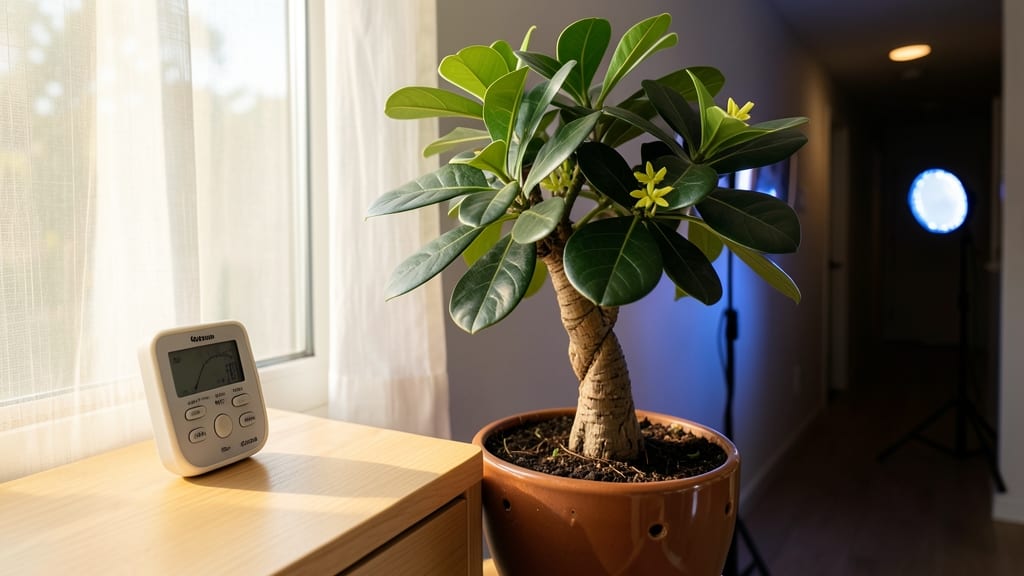
If your 💰 Money Tree looks sadder than a rainy day in Zone 6a, it’s probably not getting how much light does a Money Tree plant need.
This tropical beauty thrives on bright, indirect sunlight—but too much direct sun can turn its leaves crispy, while too little leaves it weak and leggy.
You might think any sunny spot will do, but that’s where most plant parents go wrong. The key is mimicking its natural understory habitat with 4-6 hours of filtered light daily.
Whether you’re dealing with a dim corner or a blazing south window, I’ll show you exactly how to strike the perfect balance.
Let’s tackle the most common mistakes first—like why your Money Tree’s leaves are turning yellow or brown—and how to fix them with simple adjustments. You’ll learn which windows work best, when to supplement with grow lights, and how seasonal changes affect its needs.
By the end, your Money Tree won’t just survive—it’ll grow into that lush, vibrant centerpiece you’ve always dreamed of. Ready to give it the light it truly deserves?


Understanding money tree light requirements: the ideal bright indirect sunlight balance
Your money tree (Pachira aquatica) thrives in bright indirect sunlight, but getting the balance right can feel tricky. Too little light leads to stunted growth and pale leaves, while too much causes leaf scorch and crispy edges.
The key is mimicking its natural tropical habitat where sunlight filters through the canopy.
Think of your money tree’s ideal spot as a dappled forest floor—bright enough to support photosynthesis but protected from harsh direct rays. This means placing it near a window where sunlight spreads gently across the leaves, rather than baking them like a summer afternoon.
Here’s the golden rule: 4-6 hours of bright indirect light daily. This duration gives your plant enough energy to grow without risking damage. If your home lacks natural light, don’t worry—we’ll cover artificial solutions later to keep your money tree happy.
Watch for these tell-tale signs of light issues. Yellowing leaves or slow growth? It’s likely underlit. Brown patches or crispy edges? Your tree is getting too much direct sun. Adjusting its position can fix both problems quickly.
| Light Condition | Ideal Duration | Signs of Issue | Solution |
|---|---|---|---|
| Bright Indirect | 4-6 hours daily | Healthy green leaves, steady growth | Perfect! No changes needed |
| Low Light | <2 hours daily | Pale leaves, slow growth | Move closer to window or add grow light |
| Direct Sun | >6 hours daily | Brown crispy edges, leaf scorch | Use sheer curtain or move 3-6 ft away |
For east-facing windows, your money tree gets gentle morning sun—ideal for most homes. North-facing windows provide consistent indirect light year-round, making them the safest choice. West or south-facing windows can be too intense, especially in summer, so use a sheer curtain to diffuse the light.
Seasonal changes also affect light exposure. In winter, shorter daylight hours mean your money tree may need a supplement, like a grow light, to maintain its energy levels.
Conversely, summer’s intense rays might require moving your plant farther from the window or adding shade cloth to prevent leaf burn.
Pro tip: Rotate your money tree quarter-turns every 2-3 weeks. This ensures all sides get equal light exposure, preventing lopsided growth and keeping the foliage lush and even. Think of it as giving your plant a gentle sunbath with balanced coverage.
If you notice new leaves growing smaller than older ones, it’s a clear sign your money tree isn’t getting enough light. This is your plant’s way of conserving energy. Address it quickly by moving the plant to a brighter spot or supplementing with artificial light to restore its vigor.
Remember, every home’s light varies. Test your spot by placing your hand near the window where your money tree would sit. If the light feels warm and intense, it’s likely too direct.
If it’s cool and soft, it’s perfect for your tropical friend. Trust your instincts—your money tree will thank you with glossy, vibrant leaves!
Understanding money tree light requirements: the ideal bright indirect sunlight balance
A Money Tree (Pachira aquatica) thrives in bright indirect sunlight, mimicking its natural tropical understory habitat. This means it needs 4-6 hours of filtered light daily—think dappled shade through tree canopies. Direct sun causes leaf scorch, while too little light leads to yellowing leaves and leggy growth.
Your goal is to provide moderate to high indirect light. South-facing windows can be too intense, especially in summer, while north-facing windows offer gentler, consistent light. East or west windows work well for morning or afternoon sun, but avoid harsh afternoon rays.
Here’s how to spot light-related stress in your Money Tree:
- Brown crispy edges = Too much direct sun
- Pale green or yellow leaves = Not enough light
- Slow growth or bare stems = Chronic light deficiency
| Light Condition | Ideal Placement | Signs of Stress |
|---|---|---|
| Bright Indirect | East/West window, 3-6 ft away | Healthy green leaves, steady growth |
| Direct Sun | South window without filter | Brown leaf tips, wilting |
| Low Light | North window or room corner | Yellow leaves, sparse growth |
If your home lacks natural light, a grow light (LED or fluorescent) can supplement with 12-14 hours of light daily. Position it 6-12 inches above the plant and adjust height as it grows. Rotate the pot weekly for even exposure.
Seasonal changes matter too. In summer, increase shade with sheer curtains or move the plant further from windows**. In winter, supplement with grow lights if daylight drops below 6 hours.
Pro tip: Use a light meter (or your phone’s lux app) to measure light levels. Aim for 1,000-2,000 lux—this is the sweet spot for your Money Tree’s health and growth. 🌱