
Plants
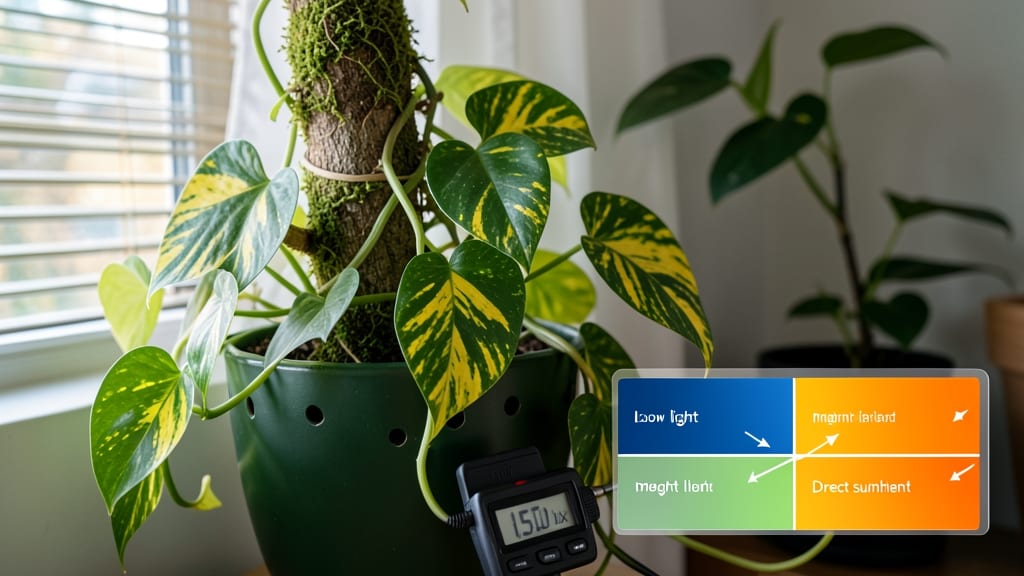
If your Pothos 🌿 plant is looking a little sad, the culprit might be simpler than you think—how much light does a pothos plant need? This hardy vine is famous for thriving where others fail, but even it needs the right balance to shine (literally).
Too little light and it stretches leggy; too much, and those gorgeous leaves start burning.
Here’s the good news: Pothos is one of the most forgiving plants out there, making it perfect for offices, bathrooms, or even dim corners. But to keep it lush and vibrant, you’ll want to understand exactly how much light it craves—and how to spot when it’s not getting enough.
In this guide, I’ll break down the ideal light conditions for your Pothos 🌿, from low-light tolerance to signs of stress, so you can give it the perfect spot. Whether you’re dealing with fluorescent bulbs or a sunroom, you’ll learn how to keep your plant happy year-round.
Ready to transform your plant from struggling to stunning? Let’s dive into the lighting secrets that’ll have your Pothos thriving in no time.

Pothos light requirements: the ideal spectrum for healthy growth
If you’ve ever wondered, "How much light does a pothos plant need?", the answer is simpler than you might think. Pothos (Epipremnum aureum) thrives in bright, indirect light but can adapt to low-light conditions—making it perfect for offices, bathrooms, or dim corners.
The key is understanding the light spectrum your plant prefers to avoid common issues like yellow leaves or leggy growth.
Pothos plants fall into three light categories: low, medium, and bright indirect. Each category affects growth differently—low light slows growth but keeps leaves small, while bright indirect light encourages faster, bushier vines.
The ideal range is 2-6 hours of indirect sunlight daily, but they can survive with as little as 1-2 hours in truly dark spaces.
Here’s how to visualize the perfect balance: Imagine placing your pothos 1-3 feet away from a north-facing window—this mimics the dappled sunlight of their native tropical forests.
South- or west-facing windows can work too, but only if you filter the light with a sheer curtain to prevent leaf scorch from direct rays.
🌿
The variegated varieties (like ‘Golden Pothos’ or ‘Marble Queen’) need slightly more light to maintain their striking patterns. Without enough light, their leaves may revert to solid green, losing their golden or silver streaks.
Think of it like a mood ring for your plant—bright indirect light keeps their colors popping!
Rotating your pothos quarter-turns every 2-3 weeks ensures even growth, especially if one side faces the window. This simple trick prevents lopsided vines and helps your plant grow fuller and more symmetrical. Even in low light, a rotated pothos will reward you with uniform trailing beauty.
Artificial lighting can be a lifesaver if your space lacks natural light. A 12-inch LED grow light (with a cool white spectrum) placed 6-12 inches above your plant for 12-14 hours daily mimics ideal conditions.
Just avoid heat-emitting bulbs, which can dry out leaves faster than a desert breeze.
🪴
Pro tip: If your pothos starts developing long, bare stems (a sign of light starvation), it’s not too late to adjust. Move it closer to a light source or prune the leggy sections to encourage new growth from the nodes.
With the right light, your pothos will bounce back faster than you can say "photosynthesis!"
Remember, pothos are forgiving—they’d rather survive in subpar light than wilt from too much sun. But for optimal health and those show-stopping variegated leaves, aim for medium to bright indirect light.
Your plant will thank you with glossy, heart-shaped leaves and trails that could put a jungle to shame.
Signs your pothos isn’t getting enough (or too much) light
Your Pothos 🌿 might be silently screaming for help—if it’s not getting the right amount of light, its leaves tell the story. The key is spotting these visual cues early, so you can adjust its spot before damage sets in.
Let’s decode the signs so you can give your plant the perfect lighting balance.
When your Pothos 🌿 stretches toward the light like a sleepy cat reaching for the sun, it’s begging for more brightness. These leggy stems with sparse leaves mean it’s not getting enough light to photosynthesize properly.
The good news? This is an easy fix—just move it closer to a bright, indirect light source.
🌱
🌿 Too Little Light
Stems stretch excessively, leaves space far apart.
Fading green or yellowing due to lack of chlorophyll.
New leaves appear infrequently or stay small.
⚠️ Solution
Relocate to 2-6 ft from a north-facing window.
Ensure even light exposure on all sides.
12-14 hours of LED grow light if natural light is insufficient.
On the flip side, if your Pothos 🌿 leaves develop crispy brown edges or yellow patches, it’s getting too much direct sunlight. These sunburn marks appear as dry, papery spots, often on leaves facing the light source.
The fix? Move it to a shadier spot or filter the light with a sheer curtain.
Another red flag is dark brown or black spots on leaves, which can signal overwatering combined with too much light. This creates stress, causing the plant to wilt or drop leaves. If you notice this, reduce watering frequency and move the plant to indirect light immediately.
🌿
Pro tip: Check the underside of leaves for discoloration—this is often where light stress shows up first. A healthy Pothos 🌿 should have vibrant green leaves on both sides, with no signs of crispiness or fading. By tuning into these subtle signals, you’ll keep your plant thriving without guesswork.