
Companion Plants
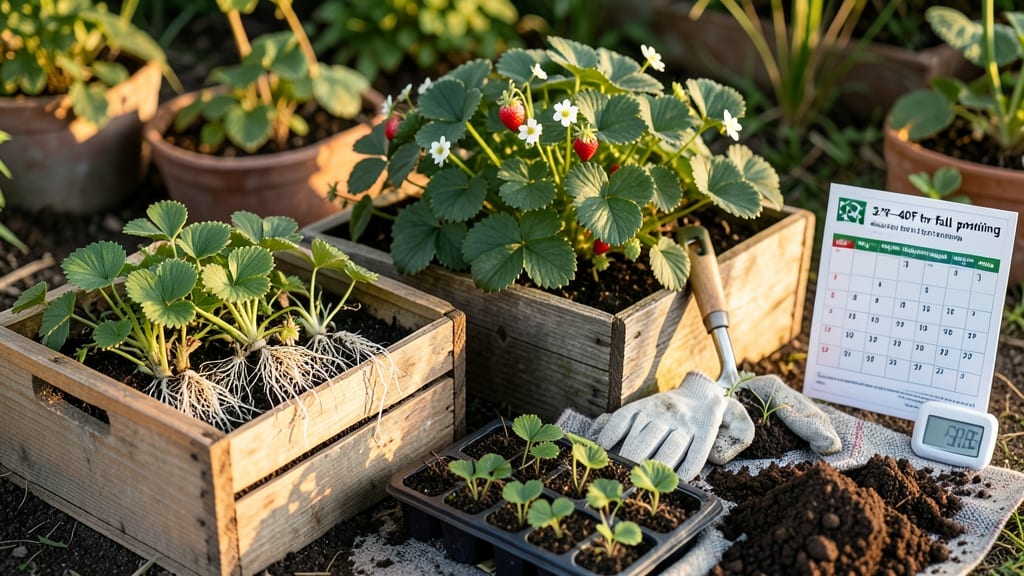
Timing your strawberry planting in Zone 6 can mean the difference between a bountiful harvest and struggling plants—get it wrong, and you risk frost damage or poor fruit development. The sweetest 🍓 berries start with planting at the right moment, whether you're working with bare-root plants or potted varieties.
Most gardeners in Zone 6 know the struggle: too early, and frost zaps your tender seedlings; too late, and your plants won't establish before summer heat sets in.
But here's the secret—optimal timing isn't just about avoiding frost. It's also about giving your strawberries enough time to root before the first harvest window opens.
In this guide, I'll walk you through the exact weeks before your last frost to plant for maximum yield, whether you're going for spring or fall planting.
You'll discover how to prepare your soil, adjust for microclimates, and avoid the 5 biggest mistakes that sabotage Zone 6 strawberry gardens every year.
Ready to grow strawberries that produce earlier and more abundantly? Let's get your planting schedule locked in for a harvest you'll actually enjoy.
Optimal planting weeks before last frost in Zone 6 for maximum yield
Planting strawberries in Zone 6 requires precision timing to avoid frost damage while maximizing fruit production. The last average frost date for most Zone 6 regions falls around April 15, but this can vary by 5-10 days depending on microclimates.
For best results, aim to plant 4-6 weeks before your local last frost date—typically between late March and early April for spring planting.
Zone 6 gardeners have two primary planting windows: spring (March-April) and fall (August-September). Spring planting gives strawberries 6-8 weeks to establish roots before summer heat, while fall planting allows them to develop strong roots before winter dormancy.
Both methods work, but June-bearing varieties thrive best with spring planting, while everbearing and day-neutral varieties adapt well to fall.
To find your exact last frost date, check the USDA Plant Hardiness Zone Map or use local weather station data. For example, Chicago (Zone 5b/6a) typically has its last frost around April 10, while Raleigh (Zone 7b/8a) sees frost as late as April 25.
Adjust your planting schedule accordingly to avoid late-season frosts that can damage tender new growth.
For bare-root strawberries, plant as soon as the soil reaches 45°F—typically late March in Zone 6. Soak roots in lukewarm water for 30 minutes before planting to encourage root growth. Space plants 12-18 inches apart in rows 24 inches apart to allow airflow and reduce disease risk.
If planting potted strawberries, wait until nighttime temperatures stay above 40°F to avoid transplant shock.
Soil temperature is critical for strawberry establishment. Use a soil thermometer to monitor—roots won’t grow well below 45°F. In Zone 6’s cooler microclimates (e.g., mountain valleys), delay planting until May 1 to avoid spring frosts.
Conversely, in warmer urban areas, you can plant as early as March 15 if protected by row covers.
June-bearing strawberries planted in spring produce 80% of their fruit in a single harvest (June-July), while everbearing varieties yield two smaller harvests (June and September). Day-neutral varieties, like Albion or Seascape, produce fruit continuously from June through October if planted in fall.
Choose your variety based on your preferred harvest schedule and Zone 6’s 165 frost-free days.
Protect young plants from late frosts using frost cloth or row covers until May 15. Remove covers during the day to allow sunlight and replace them at dusk.
Mulch with straw or pine needles to insulate roots and retain moisture. Avoid plastic mulch, which can overheat soil in Zone 6’s summers and attract pests.
If you miss the spring window, fall planting (August-September) is your next best option. Strawberries planted in late summer establish roots before winter and produce larger berries the following year.
However, avoid planting after September 15—roots need 6-8 weeks to harden off before Zone 6’s first frost (October 15).
For a year-round harvest, combine spring and fall plantings. Plant June-bearing varieties in spring for a summer crop and everbearing varieties in fall for an early autumn harvest. This strategy extends your season by 4-6 weeks and maximizes your Zone 6 garden’s productivity.
How to prepare your Zone 6 garden beds for strawberry planting success
Preparing your garden beds properly is the secret weapon for growing juicy strawberries in Zone 6. Strawberries thrive in well-draining, nutrient-rich soil with a pH between 5.5 and 6.8. If your soil is compacted, heavy clay, or too acidic, your plants will struggle—even with perfect planting timing.
Start by testing your soil's pH using a home test kit or send a sample to your local cooperative extension office. If the pH is too high (alkaline), mix in peat moss or sulfur to lower it.
For low pH (acidic soil), add lime or wood ash sparingly and retest in 2-3 weeks.
Before planting, remove any weeds or grass from the bed, as they compete for nutrients. Dig in 2-3 inches of compost or well-rotted manure to improve soil structure and fertility. For sandy soil, mix in compost and coconut coir to retain moisture.
Fresh manure can burn strawberry roots and attract pests. Always use composted organic matter that's been aged for at least 6 months.
Strawberries love full sun (6+ hours daily), but in Zone 6's hot summers, afternoon shade helps prevent fruit scorch. Choose a spot with morning sun and afternoon shade if possible, or use shade cloth (30%) during peak heat.
Mulch your beds with straw or wood chips after planting to retain moisture, suppress weeds, and keep berries clean. Avoid plastic mulch, which can overheat soil and trap moisture, promoting disease.
Finally, consider companion planting to boost growth and deter pests. Try pairing strawberries with bush beans, lettuce, or spinach, which share nutrients without competing for space. Avoid planting near potatoes or tomatoes, as they can introduce diseases.