
Plants
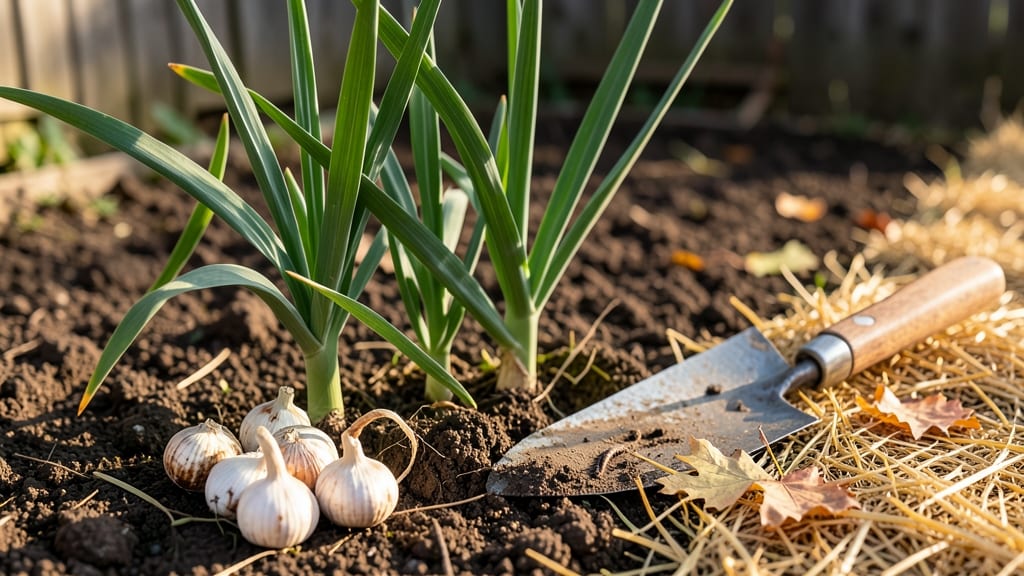
If you're wondering when to plant garlic in Wisconsin, timing is the secret ingredient that separates a thriving crop from a disappointing one.
The Badger State's chilly winters and variable climate make fall planting your best bet for hardneck varieties, but getting it wrong can mean stunted growth or wasted effort.
For Wisconsin gardeners in zones 4a-6b, the ideal window stretches from mid-October to November, when soil temperatures dip below 50°F but before the ground freezes solid.
This 4-6 week window before winter sets in gives your 🧄 cloves time to establish roots while they remain dormant through the cold months.
Planting too early risks rot from warm, moist soil, while waiting too long means poor root development before winter.
I'll show you how to adjust for Wisconsin's microclimates—whether you're in Milwaukee's urban heat islands or the cooler northern reaches near Green Bay—so you can time your planting perfectly for a summer harvest.
Let's dive into the exact strategies that work for Wisconsin's climate, from soil prep to frost timing, so you can grow garlic that rivals anything from a specialty store—starting with the right planting schedule.
Best months to plant garlic in Wisconsin for maximum yield
For Wisconsin gardeners, the ideal time to plant garlic is between mid-September and mid-November, with October being the sweet spot for hardneck varieties. This timing ensures garlic cloves establish roots before the ground freezes, allowing them to develop strong bulbs over winter.
In Wisconsin’s USDA Zones 4a-6b, this window aligns perfectly with soil temperatures dropping below 50°F (10°C)—the threshold garlic needs to trigger bulb formation.
Hardneck garlic, the variety best suited for Wisconsin’s climate, thrives when planted 4-6 weeks before the first hard frost. For most of the state, this means late September to early October, but gardeners in Zone 4a (northern WI) should aim for mid-September to avoid early freezes.
In Zone 6b (southern WI), you can extend planting until mid-November, giving you more flexibility.
Timing is critical because garlic grows best when it experiences cold winter temperatures (20-40°F/-7 to 4°C) for bulb development. Planting too late—after the ground freezes—can stunt root growth, while planting too early (August) risks rot from warm, moist soil.
The key is to balance these factors with Wisconsin’s unpredictable fall weather.
Why October is Optimal: October provides enough time for roots to establish before winter sets in, while still allowing garlic to experience the necessary cold period. In my own garden in Madison (Zone 5b), I’ve found that planting in early October yields the largest bulbs by harvest time.
One common misconception is that garlic can be planted anytime in fall. However, soil temperature matters more than calendar dates. Use a soil thermometer to confirm temps are between 40-50°F (4-10°C)—this is the sweet spot for root establishment.
In my experience, planting when soil temps hit 50°F (10°C) ensures garlic won’t rot before winter sets in.
Wisconsin’s microclimates also play a role. Urban areas like Milwaukee (Zone 6a) often have later frosts than rural areas in Zone 4a. Check your local frost date averages (available through the Midwestern Regional Climate Center) and adjust accordingly.
For example, in Green Bay (Zone 5a), I plant by October 1st to avoid early freezes that can damage emerging shoots in spring.
If you miss the fall window, you can still plant garlic in early spring (March-April), but bulbs will be 30-50% smaller because they won’t experience the cold period needed for full development. For maximum yield, stick to the fall planting schedule—it’s worth the effort to plan ahead!
Pro tip: Mark your calendar for 4-6 weeks before your average first frost date. In Wisconsin, this typically falls between September 20th and October 15th, depending on your location.
Using a garden journal to track your local frost dates year after year will help you fine-tune your planting schedule for future seasons.
Best months to plant garlic in Wisconsin for maximum yield
Wisconsin’s cool climate makes it perfect for growing hardneck garlic, but timing your planting is critical. The ideal window is between mid-September and mid-November, with October being the sweet spot for most regions.
This timing ensures garlic cloves establish roots before the ground freezes, allowing them to develop strong bulbs over winter. In USDA Zones 4a-5a (northern WI), aim for late September to early October, while Zones 5b-6b (southern WI) can extend planting until mid-November.
Garlic needs 4-6 weeks of cool soil temperatures (below 50°F) before the ground freezes solid. If planted too early, cloves may sprout and rot in warm soil. Waiting until soil temps drop below 40°F at night signals it’s time to plant.
Use a soil thermometer to monitor—this is especially important in Milwaukee and Madison, where soil warms faster in urban areas.
For maximum bulb size, prioritize late fall planting (October-November). Hardneck varieties like ‘German White’ or ‘Music’ thrive when exposed to vernalization (cold temperatures), which triggers bulb formation. Planting in December or January is risky—cloves may not establish roots before dormancy, leading to poor yields.
Even spring planting (March-April) is less ideal, as bulbs won’t develop fully before summer heat sets in.
🌱 Wisconsin Garlic Planting Timeline
| Month | Optimal Planting Window | Soil Temp Goal | Key Notes |
|---|---|---|---|
| September | Late Sept (Zones 4a-5a) | 40–50°F | Early planting for northern WI; risk of rot if soil stays warm. |
| October | Best for all zones | 32–40°F | Ideal for root establishment before frost. |
| November | Early Nov (Zones 5b-6b) | Below 40°F | Plant 4–6 weeks before hard freeze. |
⏰ Pro Tip: Check your local first frost date (e.g., Oct 15 in Zone 6b) and plant 6 weeks prior.
In southern Wisconsin (e.g., Milwaukee, Madison), where winters are milder, you can push planting to mid-November. However, avoid planting after the ground freezes solid—cloves won’t root, and you’ll waste your bulbs.
For northern WI (e.g., Green Bay, Eau Claire), wrap cloves in straw mulch (4–6 inches deep) after planting to insulate them through winter. This extra layer helps protect against freeze-thaw cycles, which can damage emerging shoots in spring.
One common mistake is assuming spring planting works in Wisconsin. While some gardeners try it, garlic planted in March or April often produces smaller bulbs with fewer cloves. The vernalization process (cold exposure) is essential for hardneck varieties to form proper bulbs.
If you miss the fall window, consider overwintering cloves indoors (in a cool, dark place) and planting in early spring, but yields will likely be 20–30% smaller.
For consistent results, mark your calendar for October 15th—this is the average ideal date across most of Wisconsin. Adjust by 1–2 weeks earlier for northern zones or 1–2 weeks later for southern zones.
Pair this with well-draining soil (amend with compost if needed) and full sun exposure (6+ hours daily), and you’ll be on track for a bountiful July harvest.