
Plants
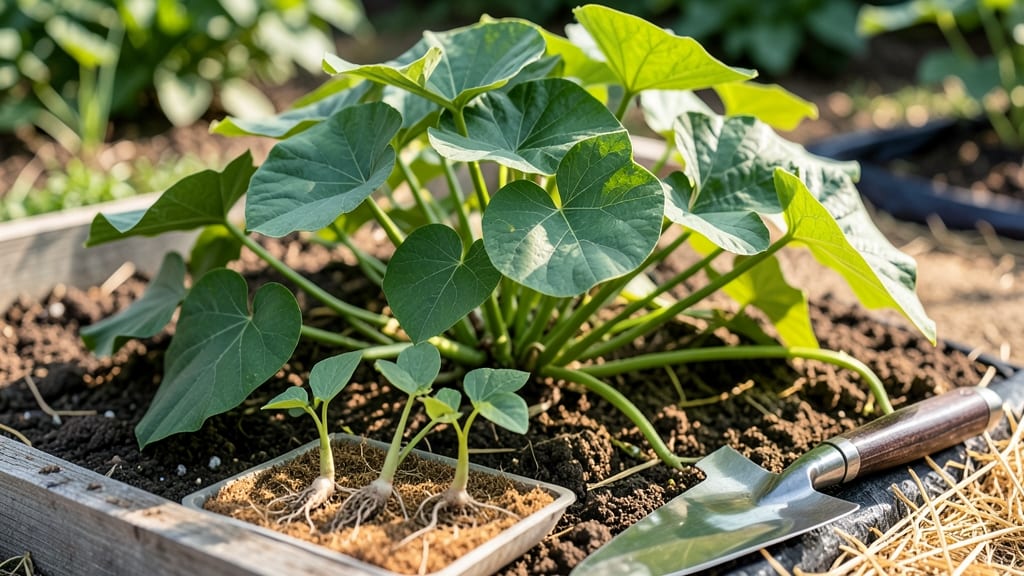
Planting your 🍠 sweet potatoes at the wrong time in Alabama could mean the difference between a harvest full of sweet, golden tubers and a crop lost to frost or stunted growth.
The key window—mid-April to early June—aligns perfectly with Alabama’s 7b-8b climate, but even small timing mistakes can throw off your entire season.
Most gardeners in Alabama focus on avoiding frost, but there’s more to it: soil temperature matters just as much. Slips thrive when the ground warms to at least 65°F, which typically happens around late April in most regions.
Plant too early, and your young plants will wilt; too late, and you’ll miss the 100-day growing window needed for full-sized tubers.
I’ve seen firsthand how local microclimates—like urban heat pockets or higher elevations—can shift that window by 2-3 weeks. That’s why I’ll walk you through exactly how to adjust your planting dates, whether you’re in North Alabama (where frost lingers longer) or the warmer Central/South regions.
Ready to grow sweet potatoes that rival the ones at your favorite farmers' market? Let’s dive into the secrets—from slip selection to soil prep—that’ll give you a harvest worthy of Alabama’s late fall bounty.
Alabama sweet potato planting calendar: best slip timing by region
Alabama’s varied climate means your sweet potato planting window shifts dramatically from North Alabama’s cooler hills to South Alabama’s balmy lowlands. In USDA Zones 7b-8b, the difference between a 100-day harvest and a frost-killed crop often comes down to soil temperature and last frost dates.
Let’s break it down by region so you can plant your slips (young plants) at the perfect time.
Most Alabama gardeners wait until after the last frost (typically mid-April in North Alabama and early March in South Alabama) to plant sweet potato slips. But here’s the secret: soil temperature matters more than air temperature.
Sweet potatoes won’t thrive until the soil reaches a steady 65°F (18°C). In North Alabama, this usually happens by late April, while Central and South Alabama can plant as early as mid-March.
For zero frost risk harvests, aim to plant slips 90-100 days before your area’s first frost. In North AlabamaNovember 15), that means planting by early June for a late fall harvest. Meanwhile, South Alabama gardeners have until mid-June to plant and still avoid frost damage.
🌱 Pro Tip: Use a soil thermometer to confirm temperatures before planting. If your soil is below 65°F, wait a few more days—cold soil slows root growth and increases disease risk.
🌡️ Alabama Sweet Potato Planting Timeline by Region
| Region | Last Frost Date | Ideal Planting Window | Soil Temp Threshold | Harvest Window |
|---|---|---|---|---|
| North Alabama | Mid-April | Late April - Early June | 65°F+ (after April 20) | October - November |
| Central Alabama | Early April | Mid-April - Late May | 65°F+ (after April 10) | Late September - November |
| South Alabama | Late March | Early March - Mid-June | 65°F+ (after March 15) | October - December |
📅 Note: Adjust dates 1-2 weeks earlier for urban heat islands or sandy soils that warm faster.
If you’re in North Alabama and worried about late frosts, consider using black plastic mulch to warm the soil faster. Lay the mulch down 2-3 weeks before planting to create a microclimate that reaches 65°F sooner. This trick lets you plant 10-14 days earlier without risking frost damage.
For Central and South Alabama, the real challenge is often hurricane season. If you plant in late June, your vines may struggle to establish before storms hit.
To hedge your bets, plant two batches: one in April for an early harvest and another in early June for a late-season crop.
💡 Alabama Extension Insight: The Alabama Cooperative Extension System recommends planting slips 12 inches apart in rows 3-4 feet apart. This spacing gives vines room to spread while keeping tubers from competing for nutrients.
For high-yield gardens, try hill planting—mound soil around slips to encourage deeper root growth.
Finally, don’t forget that sweet potatoes are heat-lovers. In South Alabama, you can even plant a second crop in early July for a winter harvest (just be prepared to harvest before December when days shorten).
The key is consistent soil warmth—once your slips are in, focus on mulching and deep watering to keep roots happy.
☀️ Remember: The longer your growing season, the sweeter your harvest. With Alabama’s climate, you’ve got plenty of time to experiment—just don’t wait until July or your tubers won’t have enough time to mature!
How to adjust planting dates for Alabama’s microclimates and soil conditions
Alabama’s diverse geography means your sweet potato planting dates should shift based on where you live. Urban gardeners in Birmingham face different risks than those in Mobile’s coastal humidity or the Appalachian foothills.
Even a 50-mile elevation change can delay frost by 2 weeks—so let’s break down how to fine-tune your schedule.
First, check your local last-frost date. North Alabama (like Huntsville) typically sees frost until April 15, while South Alabama (like Dothan) rarely faces frost after March 1.
Adjust your planting window accordingly—aim for 2 weeks after your last frost to ensure zero risk of chilly soil.
Soil type plays a huge role too. Sandy soils (common in Wiregrass region) warm faster but dry out quicker, so plant 1-2 weeks earlier than clay-heavy areas (like Tuscaloosa). Test your soil’s warmth with a soil thermometer—slips need 65°F+ soil to thrive.
- 📍 Urban Heat Islands: Plant 1 week later in cities (like Montgomery) where pavement retains heat—soil may hit 65°F sooner than rural areas.
- 🌡️ Elevation Zones: Add 1 week per 1,000 ft to planting dates in higher elevations (e.g., Madison County vs. Mobile County).
- 💧 Drought-Prone Areas: Use black plastic mulch to warm soil faster in sandy soils (e.g., Autauga County), letting you plant 2 weeks earlier.
Don’t overlook microclimates within your yard. A south-facing slope warms 3-5°F faster than a north-facing bed, so plant slips there first. Similarly, row covers can push your planting window 3 weeks earlier in cooler zones by trapping heat.
For late-season adjustments, monitor Alabama Extension’s frost risk maps (updated weekly). If a late frost is forecasted after your harvest, prioritize early-maturing varieties like Beauregard (90-day harvest) over Covington (110 days).
Pro tip: Direct-seed sweet potatoes (not slips) in early May for a second crop in South Alabama—this avoids transplant shock and extends your harvest window by 3-4 weeks. Just cover seeds with 1/2 inch of soil and keep them moist until germination.
Finally, hurricane season (June-November) can delay harvests in coastal areas. If storms threaten, use cattle panels as windbreaks to protect your vines and tubers from flying debris. Timing isn’t just about frost—it’s about weather resilience too.