
Trees
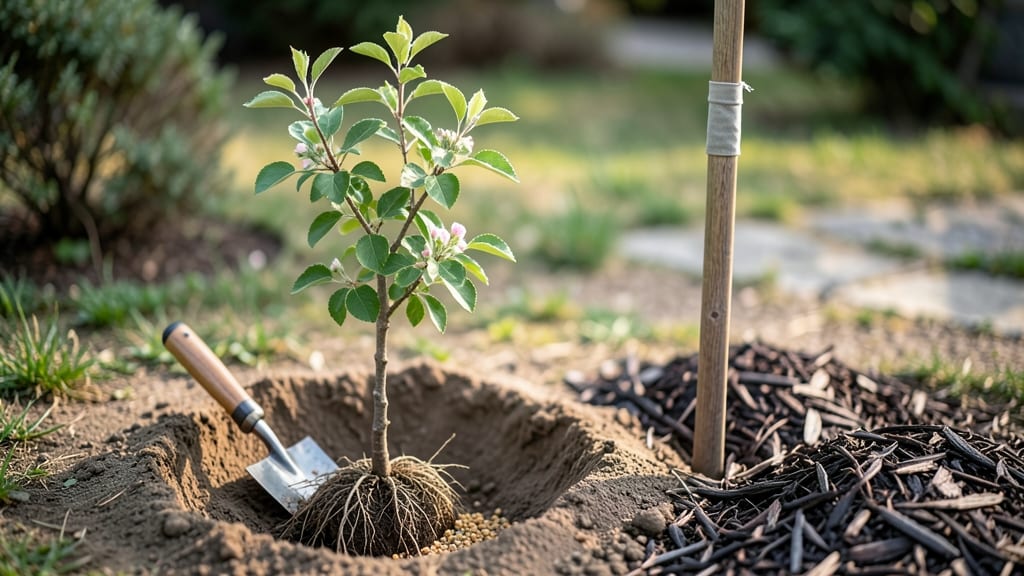
Timing your apple tree planting in Alabama isn't just about grabbing a shovel—it's about dodging late frosts that could turn your 🍏 sapling into a sad, frozen stick.
With Alabama's 7a-8b zones, you've got a narrow window between February and March to get it right, but the wrong week could mean the difference between a thriving orchard and a sad pile of mulch.
Here's the kicker: Northern Alabama's chillier nights demand heartier varieties, while Southern counties can handle more heat-tolerant types. Plant too early, and you risk frost damage to tender roots; too late, and your tree might struggle to establish before summer's brutal heat arrives.
I'll break down exactly when to dig in your county—plus how to prep soil and protect young trees from Alabama's unpredictable weather.
Let's cut to the chase: The best planting window is late winter to early spring, but the exact date depends on your chill hours and last frost date. We're talking February for Southern Alabama and March for the North, with soil temps playing a crucial role.
Stick with me, and you'll know exactly when to plant for maximum survival rates—no guesswork, just science-backed timing.
You'll also discover how to tell if your soil's ready, which apple varieties thrive in your specific zone, and how to shield young trees from Alabama's infamous spring frost surprises.
Trust me, getting this right means the difference between a 🍏 tree that flourishes and one that fizzles out before it even starts bearing fruit.
Alabama apple tree planting timeline by chill-hour requirements
Alabama’s diverse climate means chill hours (the number of hours below 45°F) dictate which apple varieties thrive in your county. Northern Alabama (like Huntsville) needs 800+ chill hours, while southern counties (like Mobile) only require 300-500 hours.
Planting the wrong variety can mean no fruit—or worse, a dead tree.
For example, Fuji apples need 800+ chill hours, perfect for Madison County, but will fail in Mobile County. Instead, opt for Anna or Dorsett Golden, which thrive with 300-500 chill hours. Always check your USDA Zone (7a-8b) and county chill-hour maps before buying.
Timing your plant also depends on chill-hour needs. Trees with high chill-hour requirements (like Gala) should go in late winter (Feb-March), while low-chill varieties (like Ein Shemer) can wait until early spring (March-April). This ensures roots establish before buds break.
🌱
| Variety | Chill Hours | Best Alabama Counties | Planting Window | Frost Risk |
|---|---|---|---|---|
| Anna | 300-500 | Mobile, Baldwin, Escambia | Feb-Mar | Low (Zone 8a) |
| Dorsett Golden | 400-600 | Autauga, Montgomery, Elmore | Feb-Mar | Moderate (Zone 7b-8a) |
| Ein Shemer | 200-400 | Jackson, Escambia, Covington | Mar-Apr | Low (Zone 8a) |
| Fuji | 800-1000 | Madison, Marshall, Jackson | Jan-Feb | High (Zone 7a) |
| Gala | 600-800 | Cullman, DeKalb, Etowah | Feb-Mar | Moderate-High (Zone 7a-7b) |
⚠️ Pro Tip: Use the Alabama A&M University chill-hour calculator to verify your county’s exact needs.
North Alabama’s earlier frost dates (as early as November 15 in Madison County) mean you must plant bare-root trees in January-February to avoid winter die-off. In contrast, southern Alabama’s milder winters (last frost around March 1) allow planting until March-April.
Always check the NOAA frost probability maps for your county. For example, Huntsville has a 30% chance of frost in early March, while Birmingham drops to 10%. Planting too late risks root shock or bud damage from unexpected cold snaps.
If you’re unsure about your chill hours, contact your local Alabama Cooperative Extension office. They’ll provide free soil tests and climate data tailored to your property. For instance, Autauga County averages 550 chill hours, making Dorsett Golden a foolproof choice.
For container-grown trees, the window extends slightly later (March-April) because their roots are less vulnerable to freeze-thaw cycles. However, they still need 6-8 hours of sun and well-draining soil to thrive.
Avoid planting in waterlogged areas, as root rot is a common killer in Alabama’s heavy clay soils.
🌳
Best months to plant apple trees in Alabama counties (with frost risk maps)
Alabama’s frost-free windows vary wildly from North to South, so timing your apple tree planting depends on your county’s last frost date. In North Alabama (7a zones), aim for late February to early March when soil temps hit 40°F—any earlier, and frost can still nip tender roots.
Meanwhile, Central Alabama (7b) gardeners can plant as early as mid-February, while Southern counties (8a-8b) often see safe planting by late January.
But here’s the catch: Spring frosts can hit anytime before mid-April, even in warm zones. I always check the NOAA frost risk maps for my county before digging—it’s saved my saplings more times than I can count.
For example, Madison County averages its last frost around March 15, while Mobile County rarely sees frost after February 15.
🌱 Pro Tip: Plant bare-root trees in dormant season (Dec-Feb) for best root establishment, but container-grown trees can handle early spring planting if soil isn’t frozen. Just avoid bud break—that’s when frost becomes deadly.
| Region | USDA Zone | Best Planting Window | Last Frost Date | Chill Hours Needed |
|---|---|---|---|---|
| North Alabama | 7a | Late Feb - Early Mar | Mid-March | 800-1,000+ |
| Central Alabama | 7b | Mid-Feb - Late Mar | Early March | 600-800 |
| South Alabama | 8a-8b | Late Jan - Feb | Mid-February | 400-600 |
If you’re in North Alabama, ‘Fuji’ or ‘Gala’ varieties with 800+ chill hours are your best bet—they survive our colder winters. But in Southern Alabama, ‘Anna’ or ‘Dorsett Golden’ (low-chill varieties) thrive where Fuji would freeze solid.
I once planted a Fuji in Mobile County—it lasted two years before dying from winter stress. Lesson learned!
🌡️ Watch for: Soil temps below 40°F (use a soil thermometer) and avoid planting if frost is forecasted within 2 weeks. Container-grown trees can handle slightly later planting, but bare-root trees need cooler soil to establish roots before summer heat arrives.
For extra protection, I recommend planting 1-2 weeks earlier than the average last frost date—just cover young trees with row covers if frost threatens. And if you’re in transition zones (7a/7b border), consider intermediate varieties like ‘Jonagold’ (650-800 chill hours) for flexibility.