Plants
If you're asking "when to plant bell peppers in Arkansas", the answer isn't just about dates—it's about avoiding frost while embracing the state's 7a-8b climate.
Plant too early, and a late freeze could wipe out your 🌶️ seedlings; too late, and the summer heat might stress your plants before they bear fruit.
Arkansas gardeners have two prime windows: mid-April to early June for spring plantings or late July to early August for a fall harvest. The key is waiting until soil temperatures hit at least 65°F, ensuring your peppers thrive instead of struggling.
This timing aligns perfectly with Arkansas's 200-240 frost-free days, giving your plants the growing season they need.
Whether you're starting seeds indoors or sowing directly, this guide will help you pick the exact moment to plant for maximum yield. You'll discover heat-tolerant varieties that flourish in Arkansas's humidity, plus pro tips to extend your harvest well into fall. Let's get those peppers growing strong!
Ready to turn your garden into a pepper powerhouse? The right timing isn't just about the calendar—it's about working with Arkansas's unique climate to grow the sweetest, most abundant 🌶️ harvest possible. Let’s make sure your peppers get the perfect start.
Optimal bell pepper planting dates in Arkansas by region (with frost-free guarantees)
Arkansas' diverse climate means planting dates vary dramatically from the cooler northern mountains to the hotter southern delta. The key is aligning your schedule with last-frost dates and soil temperature thresholds—bell peppers need soil at 65°F+ and nights above 55°F to thrive.
Let's break down the perfect windows for each region to avoid frost damage while maximizing your harvest.
For North Arkansas (USDA Zones 6b-7a), like the Ozark region, your last average frost date typically falls around April 15-30. This means you should start seeds indoors by March 1 for transplants ready by late April.
Direct sowing isn't recommended until May 15 when soil warms consistently. Carolina Wonder and Jupiter varieties excel here due to their moderate heat tolerance.
Central Arkansas (Zones 7a-7b), including Little Rock and the River Valley, enjoys a longer growing season with last frosts around April 1-15. This region gives you flexibility: start seeds indoors by February 15 or direct sow after April 15. For a fall harvest, plant seeds indoors July 1-15 and transplant by August 1—just beat the first frost (mid-November).
South Arkansas (Zones 7b-8a), such as the Delta region, has the longest season with last frosts around March 15-April 1. You can direct sow as early as March 20 if soil is warm enough. For fall, plant seeds indoors by July 1 and transplant by July 20 to avoid late-season heat stress. Arkansas Traveler and NuMex Sandia thrive in this heat.
| Region | Last Frost Date | Indoor Start (Seeds) | Transplant Ready | Direct Sow Date | Fall Planting Window |
|---|---|---|---|---|---|
| North Arkansas | April 15-30 | March 1 | Late April | May 15 | July 1-15 (transplant by Aug 1) |
| Central Arkansas | April 1-15 | February 15 | Mid-April | April 15 | July 1-15 (transplant by July 30) |
| South Arkansas | March 15-April 1 | February 1 | Early April | March 20 | July 1 (transplant by July 20) |
Don't forget Arkansas' humidity and heat can stress young plants. Use row covers for early plantings to protect against late frosts or shade cloth (30-50%) during peak summer to prevent sun scorch.
For fall plantings, prioritize heat-tolerant varieties that can handle the transition from summer heat to cooler nights.
Pro tip: Monitor your local Arkansas Agricultural Extension Service updates for real-time frost forecasts.
Their 30-year averages might shift slightly year-to-year, and being 2 weeks ahead of the "average" last frost date gives your peppers a safety buffer. Soil thermometers are your best friend—wait until readings hit 65°F consistently before planting.
If you're in Zone 7a (northern Arkansas), consider starting a second batch indoors in July for a fall harvest. The shorter daylight hours in September-October actually help peppers sweeten faster—just avoid planting too close to frost!
For Zone 8a (southern Arkansas), you might even squeeze in a third planting in early August for a late fall bounty.
Remember: Peppers hate cold feet. Even if air temperatures seem warm, so
Heat-tolerant bell pepper varieties best suited for Arkansas’ humid climate
Arkansas’s hot, humid summers and variable rainfall demand bell pepper varieties that thrive under pressure. The wrong choice can mean wilting plants or blossom drop, so I’ve narrowed it down to the top 5 heat-tolerant varieties that consistently deliver in my garden—and yours.
Look for varieties labeled "heat-tolerant" or "long-day", as they handle Arkansas’s 90°F+ temperatures and high humidity better than standard types. My go-to picks include 'Arkansas Traveler' (a local favorite) and 'NuMex Sandia', both bred to resist common Arkansas pests like aphids and pepper weevils.
🌶️ Pro Tip: Hybrid varieties like 'Carolina Wonder' often outperform open-pollinated types in Arkansas’s climate, offering disease resistance and consistent yields even in tough conditions.
🌱 Top 5 Arkansas Bell Pepper Varieties
Open-Pollinated
✅ Disease-resistant
✅ 75-day maturity
Hybrid
✅ 60-day maturity
✅ Sweet flavor
Hybrid
✅ 70-day maturity
✅ Resists blossom end rot
Hybrid
✅ 65-day maturity
✅ Blocky shape
Open-Pollinated
✅ 80-day maturity
✅ Great for fall
For fall harvests, I recommend 'Gypsy'—it handles Arkansas’s late-summer heat and early-fall chill better than most. Plant it in late July for a September-October harvest, just before the first frost.
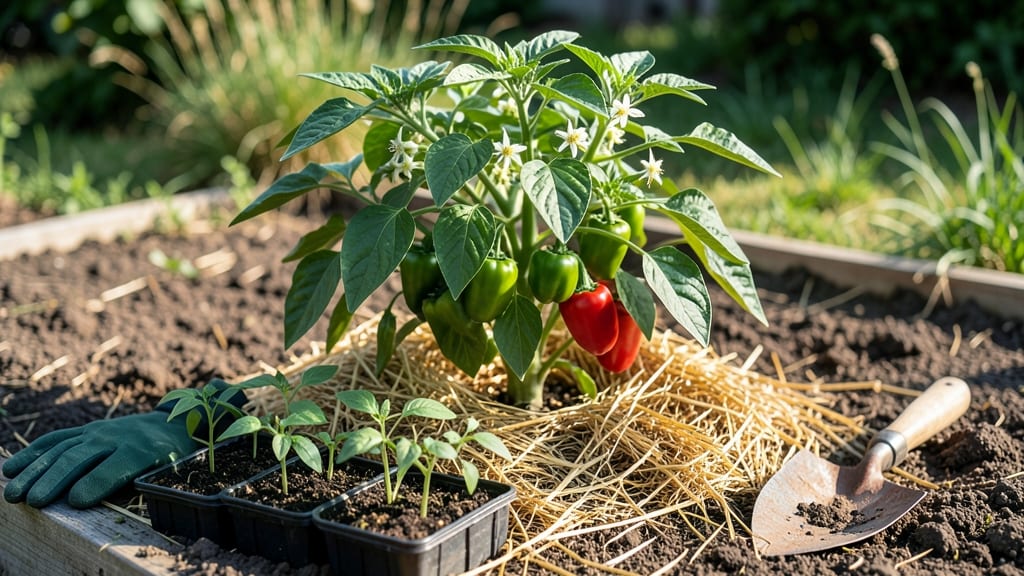
💧 Watering Hack: Mulch heavily around plants to retain moisture and prevent blossom end rot, a common issue in Arkansas’s inconsistent rainfall. Use straw or pine needles for best results.
If you’re unsure which to choose, start with 'Carolina Wonder'—it’s a hybrid powerhouse that thrives in Arkansas’s extreme conditions while delivering sweet, reliable peppers all season long.