
Plants
Optimal planting windows for celery in Louisiana’s climate zones
Louisiana’s humid subtropical climate (USDA zones 7-9) creates unique challenges for growing celery. The key is planting during cool-season windows when temperatures stay below 80°F—any hotter, and your celery will bolt or wilt.
Most gardeners in Louisiana focus on two primary planting windows: early spring and late summer.
For spring planting, aim for February to early March—just after the last expected frost (mid-February in most areas). This gives your celery 120 days to mature before summer heat sets in. In Zone 9b (southern Louisiana), you can push this slightly later into early April.
Your second window is late summer, specifically August to early September. This fall crop benefits from cooling temperatures and avoids the brutal summer heat. With proper shade and moisture, you can harvest crisp stalks by November or December before the first frost.
Here’s how these windows break down by Louisiana’s three main climate zones:
| Zone | Spring Planting Window | Fall Planting Window | Key Consideration |
|---|---|---|---|
| 7a (North) | Late Feb - Early March | Mid-Aug - Late Aug | Shorter growing season; prioritize cold-hardy varieties |
| 8a (Central) | Early March - Mid-March | Early Aug - Early Sept | Balanced heat; use shade cloth in peak summer |
| 9b (South) | Early April | Late Aug - Early Sept | Longer heat exposure; focus on rapid-maturing varieties |
If you’re in Zone 7a, where frosts linger longer, opt for cold-tolerant varieties like ‘Tall Utah’ or ‘Golden Self-Blanching’. These handle light frosts better than standard types. For Zone 9b, prioritize fast-maturing varieties (60-70 days) to avoid summer’s oppressive heat.
Pro tip: Use shade cloth (30-50%) during peak summer months to protect young plants from heat stress. This simple trick can extend your growing window by 2-3 weeks in both spring and fall.
For container gardening (ideal for small spaces or urban gardens), start seeds indoors 10-12 weeks before your target planting date. Celery thrives in 5-gallon pots with well-draining soil, making it perfect for balconies or patios.
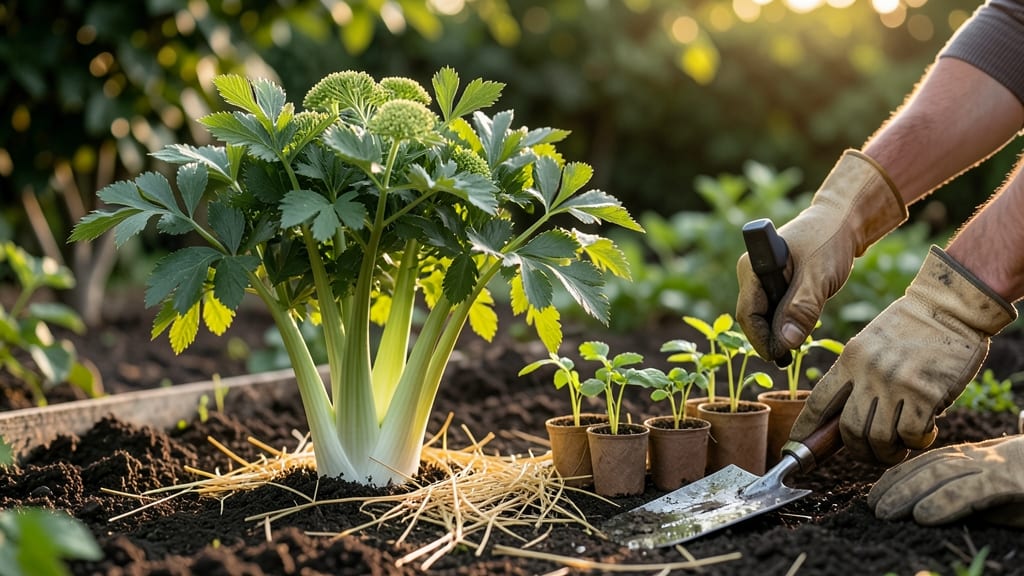
Remember: Consistent moisture is non-negotiable in Louisiana’s humidity. Mulch with straw or pine needles to retain soil moisture and suppress weeds—both critical for celery’s crisp stalk development.
🌱
Optimal planting windows for celery in Louisiana’s climate zones
Louisiana’s humid subtropical climate (USDA Zones 8a-9b) creates unique challenges for growing celery, but with the right timing, you can cultivate crisp, flavorful stalks year-round. Unlike northern regions, Louisiana’s long growing season and high humidity demand precise planting windows to avoid bolting (premature flowering) or disease pressure.
Celery thrives in cool-season conditions, making early spring (February-March) and late summer (August-September) your best bets. Spring plantings avoid summer’s 90°F+ heat, while fall plantings capitalize on milder temperatures before the first frost (December 1).
Microclimates—like shaded urban gardens or coastal areas—can shift these windows by 2-4 weeks.
| Planting Window | Ideal Months | Key Considerations | Harvest Window |
|---|---|---|---|
| Early Spring | February–March | Avoid late frosts (after Feb 15); use row covers if needed. | May–June |
| Late Summer | August–September | Use 50% shade cloth to protect from 90°F+ heat; water twice daily. | November–December |
| Fall Succession | September–October | Plant slow-bolting varieties (e.g., 'Tall Utah') for winter harvests. | December–January |
For Zone 8a (northern LA), prioritize March and September plantings to maximize frost-free days (240+ days). In Zone 9b (southern LA), August-September is safer—cooler coastal breezes delay bolting. Always harden off seedlings for 7-10 days before transplanting to avoid transplant shock.
Pro tip: Direct-sow seeds in late spring (April) for a summer harvest, but expect smaller stalks due to heat stress. Transplants (from nurseries or indoor starts) yield larger, more uniform celery. Mulch with straw or pine needles to retain moisture and suppress weeds—critical in Louisiana’s heavy clay soils.
Timing isn’t just about months—it’s about soil temperature. Celery germinates best in 50–60°F soil. Use a soil thermometer to confirm readiness; warmer soils (>65°F) trigger bolting. In humid Louisiana, fungal diseases (like early blight) are inevitable—rotate crops annually to break disease cycles.
Start with slow-bolting varieties like 'Utah' or 'Golden Self-Blanching' for Louisiana’s climate. These tolerate short-day conditions better than standard types. Pair with companion plants like bush beans or onions to deter pests and improve growth.