
Plants
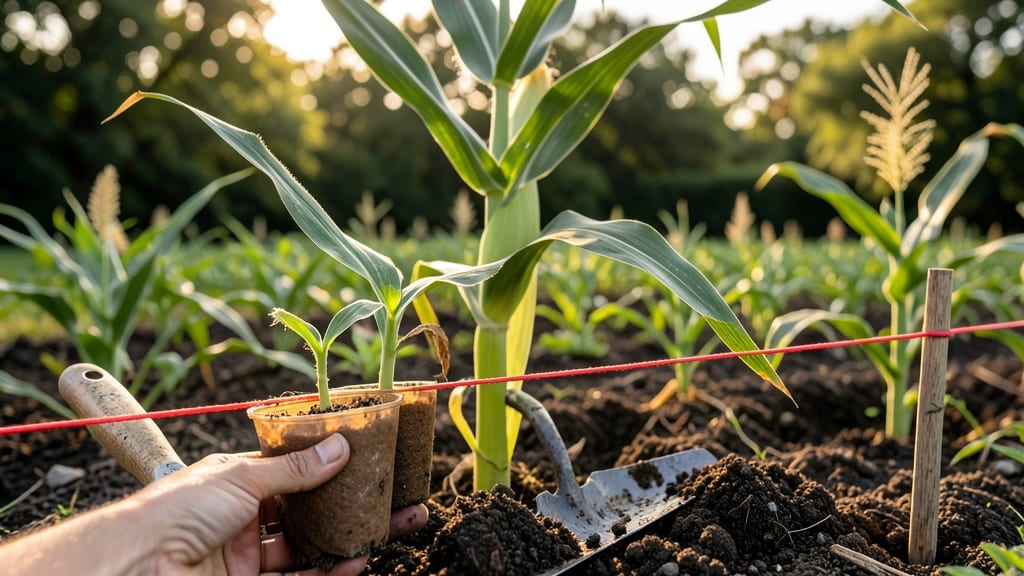
Timing your corn planting in Colorado isn’t just about calendar dates—it’s about beating the last frost, accounting for elevation shifts, and choosing the right variety for your microclimate. Skip this step, and you risk stunted plants or wasted seeds, especially when nights can still dip below 50°F even in May.
Most Colorado gardeners know the general rule: mid-April to mid-June is prime time for planting 🌽, but the real secret lies in your specific USDA zone (5-7) and whether you’re in the Front Range, Western Slope, or Eastern Plains.
Plant too early in cold soils, and your seeds won’t germinate; too late, and your harvest might face early frost before ears mature.
I’ll break down the exact weeks before your last frost to plant for peak yield, plus soil temperature thresholds and variety recommendations tailored to Colorado’s short growing season.
Whether you’re growing sweet corn for summer meals or dent corn for fall storage, getting this right means the difference between a bountiful harvest and a disappointing patch.
Ready to avoid common mistakes and maximize your corn’s potential? Let’s dive into the critical factors that determine your planting timeline—and how to adjust for Colorado’s unpredictable spring weather.
Colorado’s last frost dates by region: exact weeks to plant corn for success
Colorado’s diverse elevations create a patchwork of planting zones, where a Front Range garden might thaw weeks before the Western Slope. To nail your corn planting timeline, start with your last frost date—the average date when temperatures dip below 32°F.
In Colorado, this ranges from mid-April in lower elevations to early June at 8,000+ feet. For corn, which needs 120–165 frost-free days to mature, timing is everything.
Most Colorado gardeners aim to plant corn 2–4 weeks after the last frost, but soil temperature matters more than air temperature. Corn seeds won’t germinate well below 50°F, and ideal soil temps hover around 60–65°F.
Use a soil thermometer to confirm readiness—especially in high-altitude areas where cold soils linger longer. Pro tip: Black plastic mulch can warm soil by 5–10°F, giving you an earlier start.
Here’s how Colorado’s regions break down for corn planting windows, including USDA zone adjustments and recommended varieties:
| Region | Avg. Last Frost | Planting Window | Days to Maturity | Recommended Varieties |
|---|---|---|---|---|
| Front Range (Denver, Boulder) | Mid-April | Late April–early May | 90–110 days | 'Golden Bantam', 'Ambrosia' |
| Western Slope (Grand Junction) | Early April | Early April–mid-April | 110–130 days | 'Pride of Nebraska', 'Country Gentle' |
| Eastern Plains (Colorado Springs) | Late April | Early May–mid-May | 100–120 days | 'Silver Queen', 'Peaches & Cream' |
| High Altitude (8,000+ ft) | Early June | Late May–early June | 80–90 days | 'Early Sunglow', 'Temptation' |
For high-altitude gardens (like those in Telluride or Leadville), stick to short-season varieties that mature in 80–90 days. These areas often see earlier frosts, so plant after Memorial Day if possible.
In contrast, lower elevations (like Pueblo or Fort Collins) can handle longer-season varieties planted as early as late April, provided soil temps are consistently above 50°F.
If you’re unsure about your local frost date, check the Colorado State University Extension’s frost maps or use the USDA Plant Hardiness Zone Map. For a quick rule of thumb: Count backward 120 days from your first expected frost to determine your planting window.
For example, if frost hits October 15, aim to plant by June 15 for a 90-day variety.
One final tip: Direct-sow corn—it doesn’t transplant well. Use a seed corn planter or hand-plant seeds 1–1.5 inches deep and 4–6 inches apart in rows 30–36 inches apart.
This spacing ensures proper pollination and reduces disease risk. Once planted, monitor for soil moisture—corn roots need consistent water to avoid stunted growth.
For gardeners in drought-prone areas, consider drip irrigation or mulching to retain moisture. And remember: Wind exposure can stress young corn plants, so choose a sheltered spot or use windbreaks if needed. With the right timing and care, you’ll be harvesting plump, sweet ears by late summer.
🌽
5 Critical factors that determine your corn planting timeline in Colorado
Colorado’s variable climate means your corn’s success hinges on more than just frost dates. I’ve planted corn in Denver’s USDA Zone 5b and seen firsthand how soil temperature, elevation shifts, and even wind exposure can turn a great planting window into a disaster.
Let’s break down the 5 non-negotiable factors that dictate when—and how—to plant your corn for maximum yield.
First, soil temperature is your #1 priority. Corn seeds won’t germinate until the soil reaches a steady 50°F, but roots need 60°F+ to thrive. In Colorado’s high-altitude valleys, this can mean waiting until late May even if your last frost was in April.
Use a soil thermometer—don’t guess! Planting too early in cold soils leads to rotten seeds or stunted seedlings.
Next, your elevation zone plays a huge role. Gardeners in Fort Collins (Zone 5a) might plant in early May, while those in Grand Junction (Zone 7a) can start as early as mid-April. The Western Slope enjoys warmer springs, but the Eastern Plains often face delayed warming due to dry air.
Check your local USDA zone and adjust your timeline by 2-4 weeks if you’re above 6,000 feet.
Drought risk is another Colorado-specific challenge. Even if your soil is warm, lack of moisture can halt germination. Aim for 1-2 inches of water per week during planting, and consider drip irrigation to keep roots consistently damp. In Boulder County, I’ve seen corn seedlings fail because gardeners relied on sporadic rainfall—don’t make that mistake.
Your corn variety also dictates timing. Early-maturing varieties (like ‘Ambrosia’, ready in 70 days) can go in 2-3 weeks before your last frost, while late varieties (like ‘Golden Bantam’, 90+ days) need to be planted by mid-June to avoid frost.
Mixing varieties? Space them out by 2-3 weeks to stagger harvests.
Finally, wind exposure can’t be ignored. Colorado’s open fields and mountain gaps create wind tunnels that snap young corn stalks. If your garden is exposed, plant near a windbreak (like a fence or shrubs) or choose shorter varieties (like ‘Peaches and Cream’) that handle wind better.
I’ve lost entire rows to wind—trust me, it’s heartbreaking.