
Plants
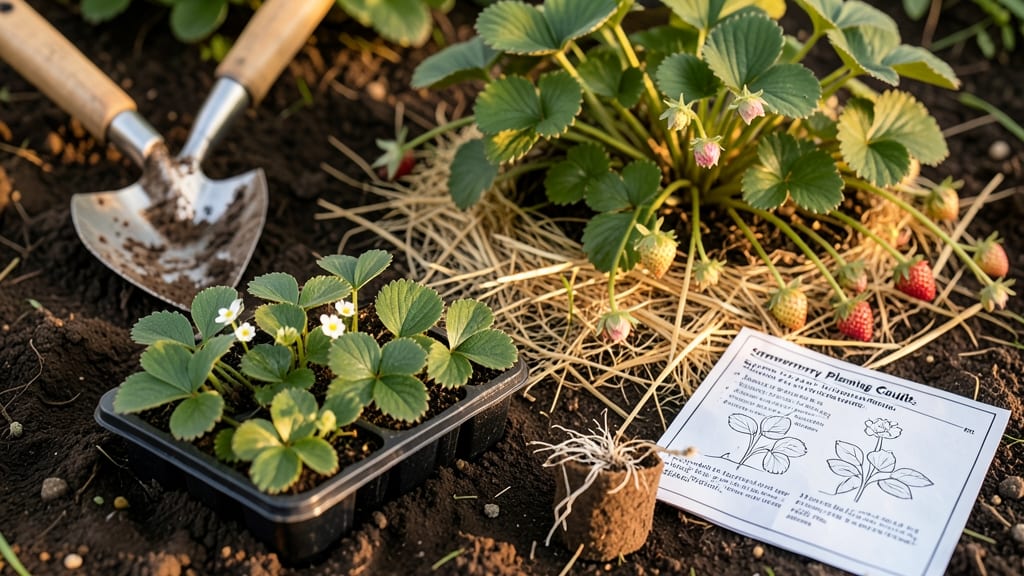
Timing your strawberry planting in Zone 8 isn't just about the calendar—it's about giving those roots the perfect head start for strong growth and sweet fruit. Plant too early, and you risk frost damage; too late, and your berries may never reach their full potential.
The secret lies in understanding when soil temperatures and daylight align just right for optimal root development.
For most gardeners in Zone 8, the best months to plant 🍓 are late winter through early spring (February to March) or fall (September to October). These windows take advantage of mild temperatures and moisture, letting roots establish before extreme heat or cold sets in.
But here's the catch: not all planting times are equal—fall often gives strawberries an edge by letting them settle before winter.
Why does this matter? Because the difference between a thriving strawberry patch and a struggling one often comes down to those first few weeks after planting.
I'll walk you through exactly how to time it right, prepare your soil, and care for your plants so they're ready to burst into growth when spring arrives.
Ready to set your strawberries up for success? Let's dive into the best planting windows, soil prep secrets, and care tips that will have you harvesting plump, juicy berries in no time.
Optimal planting months for strawberries in Zone 8: root development timeline
Zone 8 gardeners enjoy a longer growing season than cooler climates, but timing is everything for strawberry root growth. The ideal planting windows are late winter to early spring (February-March) or fall (September-October).
These periods align with soil temperatures between 40°F-60°F, perfect for root establishment before summer heat or winter dormancy.
Fall planting often outperforms spring in Zone 8 because roots establish before winter, giving plants a head start in spring. However, spring planting works well if you missed fall or prefer June-bearing varieties.
The key is avoiding extreme heat or cold during the critical first 30 days after planting.
Soil temperature is your best guide—use a soil thermometer to confirm it’s above 40°F before planting. In Zone 8, this typically happens by mid-February for spring and early September for fall. Cooler microclimates may need adjustments, like waiting until late March for spring planting.
Here’s why timing matters: Strawberry roots need 4-6 weeks to establish before summer heat arrives. Planting too early in fall (before September) risks root rot from cool, wet soils, while planting too late (after October) leaves roots vulnerable to winter freeze-thaw cycles.
For June-bearing varieties, spring planting (February-March) ensures fruit production aligns with peak summer conditions. Ever-bearing and day-neutral varieties, however, can handle fall planting (September-October) for extended harvests into fall or next spring.
In Zone 8, microclimates play a huge role. Coastal areas with milder winters can plant as late as November, while inland regions should aim for early October.
Observe your local last frost date—typically mid-November in Zone 8—and plant 6-8 weeks before to ensure roots harden off before winter.
For bare-root plants, soak roots in lukewarm water for 30 minutes before planting to revive them. Potted plants, however, can go straight into the ground, but remove any plastic pots to prevent root girdling. Both types benefit from 1 inch of compost mixed into the planting hole.
After planting, water deeply to settle soil and remove any air pockets. Use drip irrigation or soaker hoses to keep soil consistently moist for the first 2 weeks. Avoid overhead watering to prevent disease spread like gray mold (Botrytis cinerea).
Mulch with straw or wood chips (2-3 inches thick) to retain moisture and regulate soil temperature. In fall, this protects roots from freeze-thaw cycles, while in spring, it prevents soil crusting from heavy rains. Remove mulch in late winter to allow soil to warm up for spring growth.
Optimal planting months for strawberries in Zone 8: root development timeline
In Zone 8, strawberries have two prime planting windows: late winter to early spring (February to March) and fall (September to October). These periods align with soil temperatures between 40°F and 70°F, which is ideal for root establishment.
Fall planting often gives strawberries an advantage—they get a head start on root growth before winter dormancy, leading to earlier and more abundant fruit in spring.
Spring planting (February-March) works well for June-bearing varieties, which need time to establish before summer heat. Meanwhile, everbearing and day-neutral varieties often perform better with fall planting, producing fruit in both spring and fall.
The key is avoiding planting when soil is too cold (below 40°F) or too hot (above 80°F), as both can stress young roots.
| Planting Window | Soil Temp | Root Growth Phase | Best For |
|---|---|---|---|
| Late Winter (Feb) | 45-55°F | Initial root spread | June-bearing varieties |
| Early Spring (Mar) | 50-65°F | Rapid root expansion | All varieties |
| Fall (Sept-Oct) | 55-70°F | Established roots before dormancy | Everbearing/day-neutral |
For bare-root plants, soak roots in water for 1-2 hours before planting to revive them. If using potted strawberries, plant as soon as possible after purchase—they thrive when roots aren't root-bound.
In Zone 8, avoid planting in November unless your microclimate has very mild winters, as roots may struggle to establish before cold sets in.
Pro tip: Use a soil thermometer to check temperatures at 4-inch depth before planting. Aim for 50°F or warmer for spring planting and 60°F or cooler for fall to prevent heat stress.
In my garden, I've found that planting in early October gives strawberries just enough time to establish before the first frost.
After planting, focus on keeping soil consistently moist (not soggy) for the first 2-3 weeks. This encourages roots to spread quickly into the surrounding soil. In Zone 8, where summers can be dry, mulching with straw or wood chips helps retain moisture and regulate soil temperature.
Remember, the goal is to give your strawberries a strong root system before they focus on producing fruit. With the right timing and care, you'll be rewarded with bountiful harvests in both spring and fall. 🍓