
Plants
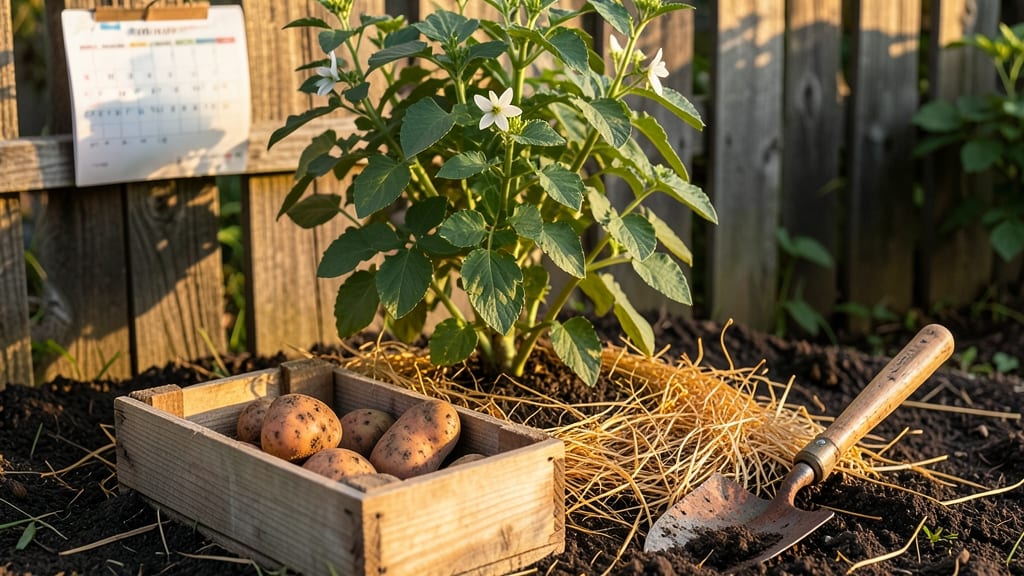
When should you plant potatoes in Michigan? Timing your potato planting can make the difference between a bountiful harvest and a wasted season. With frost dates varying from mid-April in the south to later in the north, knowing exactly when to plant your 🥔 is critical for success in zones 5b-6b.
I’ve learned the hard way that rushing into the garden too early—when soil temperatures still hover around 40°F—can stunt your spuds or leave them vulnerable to frost damage.
But planting too late risks missing the 90-120 day growing window needed for most varieties to mature before Michigan’s first frost in October.
In this guide, I’ll break down the ideal planting windows for your specific region, whether you’re in Detroit’s urban gardens or the Upper Peninsula’s cooler climate. You’ll discover how to adjust for unpredictable weather, choose the right varieties, and even use row covers to extend your growing season.
By the end, you’ll have a clear, zone-specific plan to ensure your potatoes thrive—so you can enjoy homegrown spuds from July through September without the guesswork.
Michigan potato planting dates by hardiness zone (5-6): exact timing for success
Michigan’s USDA Hardiness Zones 5b-6b create a unique challenge for potato growers, where late spring frosts can devastate early plantings while early summer heat demands precise timing. The Upper Peninsula (Zone 5) typically has 2-3 weeks earlier frost dates than the Lower Peninsula (Zone 6), so local adjustments matter.
For optimal yields, aim to plant potatoes 2-4 weeks before your area’s last frost date, when soil temperatures consistently reach 45°F (7°C). This usually falls between mid-April and early May, but soil testing is critical—cold soil delays sprouting and invites rot.
Here’s how to pinpoint your exact window using Michigan’s average frost-free dates:
| Region | Last Frost Date | Ideal Planting Window | Soil Temp Threshold | Harvest Window |
|---|---|---|---|---|
| Upper Peninsula (Zone 5) | Mid-April to early May | Late March–April 15 | 45°F+ (7°C) | Late July–early Sept |
| Lower Peninsula (Zone 6) | Late April–early May | Late April–May 1 | 45°F+ (7°C) | Mid-July–late Sept |
| Southwest Michigan (e.g., Kalamazoo) | Early May | April 15–May 1 | 45°F+ (7°C) | Late July–early Sept |
| Northern Lower Peninsula (e.g., Traverse City) | Late April | Late March–April 10 | 45°F+ (7°C) | Mid-July–late Aug |
Use the Michigan State University Extension’s frost date map to refine your timing—some areas like Detroit (Zone 6a) may see last frosts as late as May 10, while Marquette (Zone 5a) could face frost until May 15.
For urban gardeners, container-grown potatoes can be planted 1-2 weeks later since pots warm faster.
Pro tip: Chit your seed potatoes (sprout them indoors) 4-6 weeks before planting to jumpstart growth. Place them in a bright, cool spot (60°F/15°C) with light exposure to encourage strong, uniform sprouts before transplanting.
If you’re growing early-season varieties like ‘Yukon Gold’, plant them as soon as soil is workable—even if frost lingers. Late plantings (after May 15) risk smaller yields but can still succeed with fast-maturing varieties (e.g., ‘Red Norland’, ‘Kennebec’).
For organic gardeners, avoid synthetic fertilizers that can delay sprouting. Instead, mix in compost or well-rotted manure 2-3 weeks before planting to boost soil fertility without shocking the tubers. Aim for loamy, well-draining soil with a pH of 5.0–6.5—potatoes hate soggy conditions.
Remember: Michigan’s growing season is short—late plantings may not reach maturity before first frost (mid-October). Plan for two successive plantings: one in early April for early harvests and another in mid-May for late-season storage spuds.
Track your local frost dates using the National Weather Service’s climate archives or apps like PlantNet. Adjust your schedule yearly—climate change is shifting Michigan’s frost patterns, with some areas now seeing earlier springs by 1-2 weeks.
🌱
How to adjust potato planting for Michigan’s unpredictable weather: frost, rain, and early heat
Michigan’s weather is famously unpredictable—one week you’re shoveling snow, the next you’re battling heatwaves. For potato growers, this means late frosts can delay planting, while early heat might stress young plants. I’ve learned to adapt by using row covers and staggered planting to protect my crop and maximize yields.
If you’re in Southern Michigan (Zone 6b), aim to plant by mid-April when soil warms to 45°F. But if you’re in the Upper Peninsula (Zone 5b), wait until late April or early May—frost risks linger longer there.
Always check the Michigan State University Extension frost forecast for your county.
For extra protection, use floating row covers to shield young plants from late spring frosts. These lightweight fabrics raise soil temperatures by 3-8°F and can buy you 2-3 extra weeks of growing time. I’ve seen them work wonders for early plantings in May when frost is still a threat.
Even if your seed potatoes sprout, a 28°F frost can kill young plants. If frost is forecasted after planting, cover rows with heavy blankets or burlap and remove them during the day for sunlight.
🌱 Pro Tip: Plant cold-hardy varieties like Kennebec or Yukon Gold if you’re pushing early plantings.
If Michigan’s unseasonable heat hits early (like the 90°F+ days in June 2023), your potatoes may bolt (flower prematurely) or develop scab disease. To combat this, mulch with straw or grass clippings to keep soil cool and moist.
I’ve also had success with shade cloth during extreme heat waves.
For staggered planting, divide your seed potatoes into 3 batches and plant them 2 weeks apart. This spreads out your harvest and reduces risk if one planting fails. For example:
- Batch 1: Early April (fast varieties like Red LaSoda)
- Batch 2: Mid-April (mid-season types like Russet)
- Batch 3: Late April (storage potatoes like Kennebec)
Finally, watch for excessive rainfall, which can lead to diseases like blight. Plant potatoes in raised beds or on mounds to improve drainage. If your garden stays soggy, switch to drought-tolerant varieties like Purple Viking for next season.