
Plants
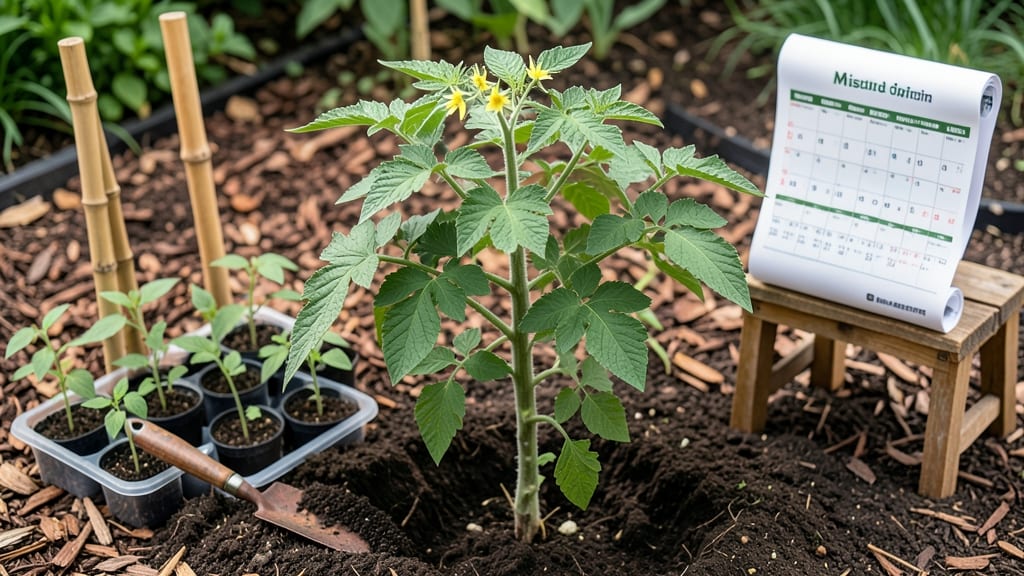
When should you plant tomatoes in Missouri to guarantee a thriving harvest of juicy, sun-ripened fruit? Timing your tomato planting can mean the difference between a bumper crop and a frost-nipped disappointment. Missouri’s 5b-6b climate zones demand precision—plant too early, and a late frost will wipe out your seedlings; too late, and you’ll miss the sweet, summer-ready tomatoes we all crave by season’s end.
Most Missouri gardeners know the golden window runs from mid-April to mid-May, but the real secret lies in your specific region. St. Louis’s last frost typically arrives by April 15, while Kansas City might wait until May 1.
I’ll break down exactly when to start seeds indoors, transplant outdoors, and how to adjust for those unpredictable Missouri springs.
You’ll also discover how soil temperature (60°F or warmer) is the true game-changer—not just the calendar. Plus, I’ll share pro tips for extending your season with row covers and companion planting to protect your tomatoes from Missouri’s infamous late frosts and early heat waves.
Ready to grow tomatoes that taste like summer all season long? Let’s dive into the perfect planting schedule tailored just for Missouri’s climate—so you can enjoy homegrown tomatoes from July through October without the guesswork.
Missouri’s last frost dates by region: critical planting windows for tomatoes
Missouri’s last frost dates vary dramatically by region—from late April in southern areas to early May in northern zones. For tomatoes, which are frost-sensitive, timing your planting after these dates is non-negotiable.
In St. Louis (Zone 6a), the average last frost is April 15, while Kansas City (Zone 5b) typically sees frost until May 1. These dates create a 45-day window between frost risk and summer heat, where tomatoes thrive.
Your planting window for tomatoes in Missouri opens 2 weeks after your region’s last frost date. This buffer ensures seedlings are hardened off and soil warms to 60°F+, the ideal temperature for root development.
For example, in Columbia (Zone 6b), with a last frost of April 20, you’d aim for May 5–15 as your transplant window.
Missouri’s first frost typically arrives between October 15–30, depending on elevation and latitude. This means your tomato plants have roughly 165 frost-free days to grow, mature, and produce fruit.
Varieties with 55–70 day maturity are ideal for northern Missouri, while 70–85 day types suit southern regions where summers are longer.
To pinpoint your exact planting window, check the Missouri Climate Center’s frost maps or use local weather stations like Weather Underground. Input your ZIP code to find historical frost data and adjust your schedule if your area has had early or late frosts in recent years.
Here’s how Missouri’s regions break down for tomato planting:
| Region | Last Frost Date | Ideal Transplant Window | Recommended Varieties | Notes |
|---|---|---|---|---|
| Southern MO (e.g., Cape Girardeau) | April 1–10 | April 15–May 1 | 'Celebrity', 'Better Boy', 'Sungold' | Longer growing season; can plant early varieties. |
| Central MO (e.g., Columbia, Jefferson City) | April 15–25 | May 1–15 | 'Early Girl', 'Roma', 'Cherokee Purple' | Moderate season; balance fast and medium maturing types. |
| Northern MO (e.g., Kansas City, St. Joseph) | May 1–10 | May 15–31 | 'Stupice', 'Mountain Merit', 'Patio' | Shorter season; prioritize cold-hardy, fast maturing types. |
| St. Louis Metro | April 15–20 | April 30–May 15 | 'Brandywine', 'Sweet 100', 'Beefsteak' | Urban heat islands can extend season; monitor soil temps. |
If you’re starting seeds indoors, begin them 6–8 weeks before your last frost date. For example, in Kansas City, that means sowing seeds by March 15.
Use grow lights to provide 14–16 hours of light daily until seedlings are ready for transplanting. Harden them off for 7–10 days before moving outdoors to prevent shock.
Missouri’s soil temperature is another critical factor. Tomatoes won’t thrive until soil reaches 60°F. Use a soil thermometer to monitor temperatures—if it’s below 55°F, delay planting or use black plastic mulch to warm the soil faster.
In cooler regions like northwest Missouri, wait until May 15 or later to ensure optimal growing conditions.
Don’t rely solely on calendar dates. Check your local National Weather Service forecast for 10-day outlooks and adjust your planting schedule if late frosts are predicted. For instance, if Kansas City experiences frost on May 5, push your transplant date to May 20 to avoid losses.
For container gardening, plant tomatoes 1–2 weeks later than in-ground plants. Containers heat up faster but also cool down quicker, making them more susceptible to temperature swings. Choose 5-gallon pots or larger and use self-watering systems to maintain consistent moisture.
Missouri’s microclimates can create significant variations in frost dates. If you live in a valley or low-lying area, expect frost 3–5 days later than higher elevations.
Conversely, urban areas like St. Louis may experience earlier last frosts due to the heat island effect. Use these regional insights to fine-tune your planting strategy.
Missouri’s last frost dates by region: critical planting windows for tomatoes
Missouri’s climate zones create big differences in last frost dates, which directly impact when you should plant tomatoes. In northern Missouri (like St. Louis), the average last frost date is around April 15, while southern regions (like Springfield) often see frost-free conditions by March 20.
These dates mark your transplanting window—waiting until after these dates ensures your seedlings survive.
For central Missouri (Columbia, Jefferson City), aim to transplant tomato seedlings between April 20 and May 10. This window balances soil warmth (ideal at 60°F+) and frost risk.
Check your local USDA Zone (5b-6b) for precise adjustments—Zone 5b areas may need to wait until May 1 to avoid late frosts.
| Region | Avg. Last Frost | Ideal Transplant Window | Soil Temp Threshold |
|---|---|---|---|
| Northern MO (St. Louis) | April 15 | April 25–May 10 | 60°F+ |
| Central MO (Columbia) | April 5 | April 15–May 1 | 60°F+ |
| Southern MO (Springfield) | March 20 | March 25–April 15 | 55°F+ |
| Kansas City | April 10 | April 20–May 5 | 60°F+ |
Use local weather data to fine-tune your schedule. Websites like the National Weather Service or Missouri Climate Center provide real-time frost forecasts. If your area experiences unpredictable spring weather, consider using row covers to protect seedlings planted 2–3 weeks earlier than the recommended window.
For container gardening, you can plant tomatoes 2–3 weeks earlier than in-ground plants since pots warm up faster. Place containers in south-facing spots and use black plastic mulch to raise soil temperatures by 5–10°F. This trick helps you start planting as early as mid-April in most of Missouri.
Missouri’s first frost typically arrives in mid-October, but late-season varieties (like 'Celebrity' or 'Mountain Merit') can produce fruit until early October. If you’re in a Zone 6a area, extend your season with cold frames or greenhouses to harvest into November.
Pro tip: Mark your calendar for June 1—this is when Missouri’s peak tomato harvest begins. Varieties with 50–60 day maturity (like 'Early Girl') planted in early May will be ready by then, ensuring a summer-long supply of fresh, homegrown tomatoes.