
Plants
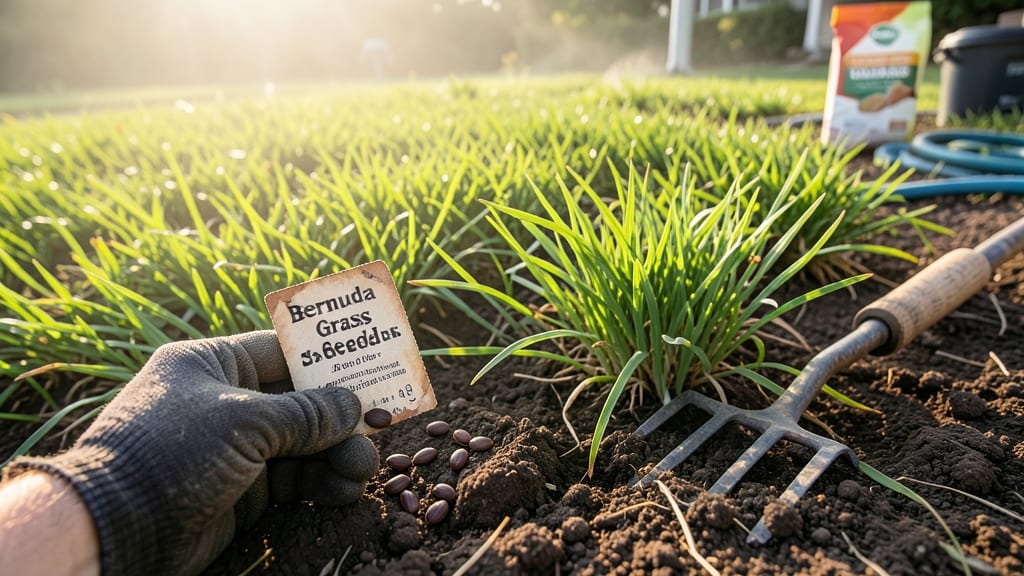
If you're dreaming of a lush, green lawn in Georgia, the perfect timing for planting Bermuda grass seed could make all the difference between success and frustration.
Georgia’s warm climate and unpredictable spring weather mean waiting too long risks weak roots or patchy growth, while planting too early can leave your seed vulnerable to frost.
Bermuda grass thrives in late spring to early summer, but the exact window depends on soil temperature and frost risk.
For Georgia’s 7b-8b zones, aim for May to early June—when soil warms to at least 65°F—to give your grass the competitive edge it needs to take hold before summer heat sets in.
This isn’t just about throwing seed on the ground and hoping for the best. Proper prep—like adjusting soil pH and controlling weeds—sets the stage for deep roots and dense growth. I’ll walk you through the exact steps to time your planting for a lawn that stays vibrant all season long.
Whether you're in Atlanta, Savannah, or Macon, getting the timing right means fewer headaches and more time enjoying your yard. Let’s break down how to nail it.
Best weeks after last frost to plant Bermuda grass seed in Georgia (with exact temperature guidelines)
Planting Bermuda grass seed in Georgia isn’t just about waiting for spring—it’s about soil warmth and frost-free conditions. The ideal window is 6-8 weeks after your last frost date, typically between late April and early June.
For most of Georgia, this means aiming for mid-May to early June when soil temperatures hit 70°F+ consistently.
Northern Georgia (Atlanta, Athens) usually has a later frost date (around March 20-30), so your planting window shifts to late May. Southern Georgia (Savannah, Macon) can start as early as mid-April if soil warms quickly. Always check your local USDA Zone 7b-8b frost maps for precision.
Bermuda grass seeds need warm soil to germinate—below 65°F delays sprouting, while above 75°F speeds it up. Use a soil thermometer to confirm temperatures before planting. In Georgia, this usually aligns with late May for most regions.
| Region | Last Frost Date | Optimal Planting Window | Soil Temp Requirement |
|---|---|---|---|
| Northern GA (Atlanta, Athens) | March 20-30 | Late May - Early June | 70°F+ (consistent) |
| Central GA (Macon, Columbus) | March 15-25 | Mid-May - Late May | 68°F+ (minimum) |
| Southern GA (Savannah, Brunswick) | March 5-15 | Early May - Mid-May | 65°F+ (early start) |
If you plant too early, cool soil and late frosts can stunt germination. If you wait too long, summer heat may stress young seedlings. Georgia’s hurricane season (June-November) also adds risk—avoid planting in late August or September when storms can uproot tender grass.
For fastest establishment, aim for late May in most of Georgia. This gives your grass 6-8 weeks of warm weather to develop deep roots before summer’s peak. Use a seed starter fertilizer (10-20-10 NPK) to boost early growth during this critical window.
Monitor your local National Weather Service forecasts for heatwaves or unpredictable rains. Bermuda grass seeds need consistent moisture but can’t handle waterlogged soil. If a 100°F+ heatwave hits, provide light shade until seedlings establish.
Pro tip: Test your soil 1-2 weeks before planting. Georgia’s clay-heavy soils retain moisture but can compact easily. Amend with compost or sand to improve drainage and aeration for better root penetration.
Once planted, water deeply twice daily for the first week to keep soil consistently moist (not soggy). Reduce to once daily after germination. Avoid walking on new seedlings—they’re delicate until fully established (6-8 weeks).
Remember, Bermuda grass is a warm-season grass. It goes dormant in winter, so planting too late means it won’t fill in before first frost (November 15). Plan ahead to avoid a patchy lawn next spring!
How to prepare your Georgia lawn for Bermuda grass seed planting (soil, sun, and competition control)
Preparing your lawn for Bermuda grass seed is just as critical as timing your planting. Georgia’s clay-heavy soils and competitive native grasses mean you’ll need to create the perfect conditions for your new seed to thrive.
Start by testing your soil’s pH level—Bermuda grass prefers a range of 6.0 to 7.0. If your soil is too acidic or alkaline, amend it with lime or sulfur 4-6 weeks before planting.
Next, clear the area of existing weeds or grass using a non-selective herbicide like glyphosate. This step is non-negotiable—Bermuda grass can’t compete with established vegetation. Once the area is clear, till the soil to a depth of 3 to 4 inches to loosen compacted clay and improve aeration.
For larger yards, consider renting a rototiller for even coverage.
| Prep Step | Action | Timing |
|---|---|---|
| Soil Test | Check pH (6.0-7.0) | 4-6 weeks before planting |
| Weed Control | Apply glyphosate | 6-8 weeks before planting |
| Soil Aeration | Till to 3-4 inches | 2-3 weeks before planting |
| Leveling | Rake for smooth surface | 1 week before planting |
Bermuda grass demands full sun exposure—at least 6 to 8 hours daily. Before planting, inspect your yard for shaded areas caused by trees, fences, or structures.
If you spot patches with less than 6 hours of sunlight, consider removing obstructions or planting shade-tolerant alternatives like Zoysia grass in those spots. Even partial shade can stunt Bermuda grass growth and leave your lawn thin and patchy.
To outcompete weeds and invasive grasses, apply a pre-emergent herbicide like prodiamine or pendimethalin right after planting. These herbicides create a protective barrier that prevents weed seeds from germinating while allowing your Bermuda grass to establish.
Reapply every 3 to 4 months during the growing season to maintain weed control. For organic options, use corn gluten meal as a natural pre-emergent.
Finally, spread a thin layer of starter fertilizer with a high nitrogen content (like 16-4-8) over the prepared soil. This gives your Bermuda grass an immediate nutrient boost for rapid germination and root development.
Water lightly after fertilizing to help the granules settle into the soil. Avoid over-fertilizing—too much nitrogen can burn young seedlings and delay establishment.
With these steps, your Georgia lawn will be primed for Bermuda grass success. The key is patience—proper prep now means fewer headaches later as your grass establishes deep roots and fills in beautifully. Ready to plant? Let’s move on to avoiding common pitfalls that trip up even experienced gardeners.