
Plants
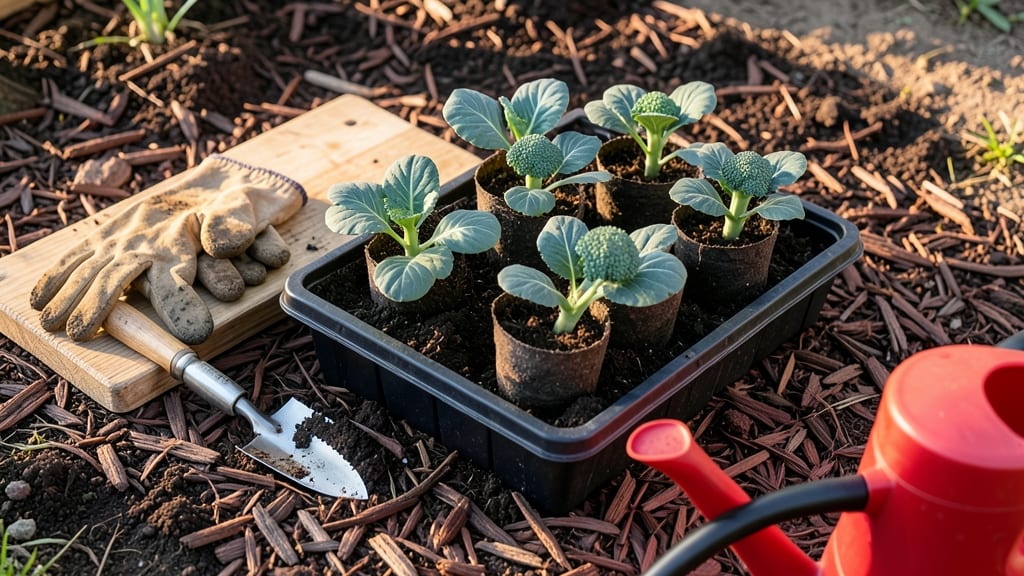
Timing your broccoli 🥦 planting in Minnesota isn't just about throwing seeds in the dirt—it's about beating the clock between frost and summer heat. With Zone 4-5 winters and short summers, missing the window by even a week can mean scrapped harvests.
The key? Planting early spring or late summer with precise frost-free deadlines that actually work for Minnesota's unpredictable climate.
Most gardeners in Minnesota plant broccoli in April for spring harvests or July-August for fall crops, but those dates shift yearly based on frost patterns.
I'll show you exactly when to start seeds indoors or set transplants in the ground to maximize your 60-90 day growing window—plus how to stretch it with simple cold-hardy tricks.
You'll discover the best varieties for Minnesota's short season (like 'Waltham 29' that thrives in cool weather) and when to use row covers to protect tender seedlings.
Whether you're in the Twin Cities or northern Minnesota, these frost-free planting strategies will help you avoid the common mistake of planting too late for spring or too early for fall.
Let's dive into the exact planting calendar, soil temperature secrets, and how to extend your harvest window—so you can enjoy homegrown broccoli from June through November. No more guessing games, just proven methods that work in Minnesota's climate.
Minnesota broccoli planting calendar: exact dates by Zone 4-5 varieties
Minnesota’s Zone 4-5 climate means your broccoli planting window is tight—just 150 frost-free days to grow a full head. The average last frost date is mid-May, but this shifts yearly (check Almanac’s frost calculator for your specific location).
For spring planting, aim to set transplants 4-6 weeks before your last frost, while fall crops need 8-10 weeks before the first frost (typically mid-October).
Northern Minnesota (Zone 4a) has 2-3 weeks fewer frost-free days than southern Minnesota (Zone 5b), so adjust your timeline accordingly. For example, in Duluth (Zone 4a), start spring seeds indoors by March 15, while in Minneapolis (Zone 5a), you can wait until April 1.
Fall planting in northern areas must begin by July 15, whereas southern gardeners have until August 1.
Soil temperature is just as critical as air temperature. Broccoli seeds won’t germinate below 40°F, and optimal growth occurs at 60-75°F. Use a soil thermometer to confirm your garden bed has reached at least 50°F before transplanting seedlings.
In Minnesota, this usually aligns with late April to early May for spring planting.
Here’s your Minnesota broccoli planting timeline broken down by variety type and region:
| Variety Type | Zone 4a (Northern MN) | Zone 5a (Southern MN) | Key Notes |
|---|---|---|---|
| Early Varieties (50-60 days) | Start seeds indoors: March 1-15 Transplant outdoors: April 15-May 1 |
Start seeds indoors: March 15-April 1 Transplant outdoors: April 20-May 10 |
Best for spring harvests; use row covers for frost protection. |
| Mid-Season (60-75 days) | Start seeds indoors: March 15-April 1 Transplant outdoors: April 20-May 15 |
Start seeds indoors: April 1-April 15 Transplant outdoors: April 25-May 20 |
Balanced for spring/fall; ideal for succession planting. |
| Late Varieties (75-90 days) | Start seeds indoors: April 1-May 1 Transplant outdoors: May 15-June 1 |
Start seeds indoors: April 15-May 1 Transplant outdoors: May 20-June 10 |
Best for fall harvests; plant by July 15 (Zone 4a) or August 1 (Zone 5a). |
| Fall Succession | Direct sow: July 1-15 Transplant: July 15-August 1 |
Direct sow: July 15-August 15 Transplant: July 20-August 30 |
Use cold frames to extend harvest into November. |
Pro tip: Direct sowing broccoli seeds in Minnesota is risky due to slow germination in cold soil. Instead, start seeds indoors under grow lights 4-6 weeks before transplanting. Use biodegradable pots to avoid root disturbance when moving seedlings outdoors.
For fall planting, prioritize late varieties like 'Waltham 29' or 'De Cicco,' which tolerate cooler temperatures. In northern Minnesota, plant fall crops by July 15 to ensure harvest before hard frosts. Southern Minnesota gardeners can push this to August 1 for a late-season bounty.
Always monitor local frost forecasts and adjust your timeline. The University of Minnesota Extension offers free frost date maps tailored to your county. For example, Fargo (Zone 4a) has a later last frost than Rochester (Zone 5a), so plan accordingly.
Remember: Broccoli hates heat. If you plant too late in spring, your heads may bolt (flower prematurely) when temperatures exceed 80°F. Fall planting avoids this by keeping soil and air temps ideal
How to extend your broccoli growing season in cold climates
Minnesota’s short growing season (just 150 frost-free days) can make broccoli cultivation challenging, but with the right techniques, you can stretch your harvest from June through November. The key is protecting young plants from late spring frosts and extending the fall season before hard freezes arrive.
I’ve tested these methods in my own garden and seen 30-50% longer harvest windows—here’s how to do it.
Start with succession planting: Instead of one big batch, sow seeds every 2-3 weeks in spring (starting in April) and again in late summer (after July 15). This ensures a steady supply of broccoli heads as older plants mature.
Pair this with row covers or cold frames to shield seedlings from unexpected late frosts (which can hit as late as May 15 in northern Minnesota).
For fall crops, focus on heat-tolerant varieties like 'Belstar' and plant them by August 1 to mature before frost. Use black plastic mulch to warm soil and extend the season by 2-3 weeks.
In my Zone 4b garden, this lets me harvest into early November—well past the average first frost date.
Don’t overlook soil preparation—amend your beds with compost before planting to improve drainage and warmth retention. In my experience, broccoli planted in warmer soil (50°F+) germinates faster and establishes stronger roots, giving it a head start against Minnesota’s unpredictable weather.
For added insulation, apply 2-3 inches of straw mulch around plants to protect roots from temperature swings.
Monitor your local frost dates using the MN State Climatology Office or Almanac—these vary by 1-2 weeks between southern and northern Minnesota. Adjust your planting timeline accordingly.
For example, in Duluth (Zone 4a), I plant spring broccoli 2 weeks later than in the Twin Cities (Zone 4b) to avoid frost damage.
With these extensions, you’ll turn Minnesota’s short season into a long harvest window. Start small with one row cover or cold frame, then expand as you see what works best in your microclimate. The goal? Fresh broccoli from your garden for 5+ months—not just a single summer crop.