Plants
If you've ever wondered when to plant collard greens in North Carolina for the sweetest, most tender harvests, you're not alone. These frost-resistant greens 🥬 thrive in NC's mild winters, but timing is everything—plant too early, and you risk bitter leaves; too late, and you miss the flavorful peak.
North Carolina's 7a-8b zones give gardeners a unique advantage with two prime planting windows: spring and fall. Whether you're a first-timer or a seasoned gardener, knowing the exact frost dates for your area is the key to avoiding common mistakes that ruin harvests.
I'll walk you through the perfect planting schedule—from soil prep to frost protection—so you can enjoy fresh collards from May through November. No more guesswork, just delicious, homegrown greens all season long.
Ready to transform your garden into a collard green powerhouse? Let's get started with the step-by-step guide that works for both coastal and inland NC climates.
North Carolina collard green planting zones & frost-resistant timing guide
North Carolina's diverse climate—from the mountains' cooler USDA Zone 7a to the coastal plains' warmer Zone 8b—creates perfect conditions for growing collard greens year-round. The key to success lies in understanding your local frost dates and planting windows, which vary by just a few weeks across the state.
Most of North Carolina experiences its average last frost around March 15, while the first frost typically arrives by November 15. However, coastal areas like Wilmington may enjoy 10-14 extra frost-free days compared to inland Raleigh or Asheville.
These microclimates mean your planting schedule should account for local elevation and proximity to water.
Collard greens thrive in cool weather and actually sweeten when exposed to light frosts (down to 20°F). This makes them ideal for fall and winter harvests, but requires precise timing to avoid stunted growth from early spring heat or late-season bolting.
Here's the frost-resistant planting schedule that works across all North Carolina zones, with adjustments for early vs. late varieties:
| Planting Window | Zone 7a (Mountains) | Zone 7b (Piedmont) | Zone 8a (Coastal) | Harvest Window |
|---|---|---|---|---|
| Spring Planting | April 1 - May 1 | March 20 - April 15 | March 15 - April 10 | June - July |
| Fall Planting | August 1 - September 1 | July 30 - August 31 | July 20 - September 15 | October - December |
| Winter Planting | September 15 - October 15 | September 1 - October 10 | August 30 - November 1 | November - February |
✅ Key: Plant 4-6 weeks before last frost for fall/winter harvests 🌱
For Zone 7a gardeners in the mountains, focus on fall plantings after August 1 to avoid early heat stress. In Zone 8a coastal areas, you can extend your season by planting as late as September 15 for winter harvests, thanks to milder temperatures near the ocean.
The 60-day harvest window for collard greens means timing matters—plant too early in spring, and you'll face bolting before maturity. Plant too late in fall, and young plants may not establish roots before winter chill sets in.
My recommended strategy is to use succession planting every 3 weeks during your zone's ideal window for continuous harvests.
Pro tip: Use row covers or cold frames to extend your growing season by 2-3 weeks in both spring and fall.
These protective measures let you plant earlier in spring (as early as March 1 in Zone 8a) or later in fall (up to October 15 in Zone 7a) without risking frost damage to young seedlings.
Remember that soil temperature is just as critical as air temperature. Collard greens germinate best in soils warmer than 45°F, which typically occurs by mid-April in most of NC. For earlier plantings, consider warm season microclimates near south-facing walls or raised beds filled with compost-rich soil.
North Carolina's frost-free growing season averages 200 days, but smart gardeners use this time wisely by double-cropping. After harvesting spring collards in June, replant the same space with fall varieties by July 15 for another harvest before winter sets in.
How to time collard green plantings for maximum frost resistance & harvest success
Timing your collard green plantings in North Carolina isn't just about avoiding frost—it's about maximizing frost resistance while ensuring tender, flavorful leaves. Since collards are cold-hardy but sensitive to extreme cold, I've found that succession planting in 3-week intervals gives me continuous harvests from May through November.
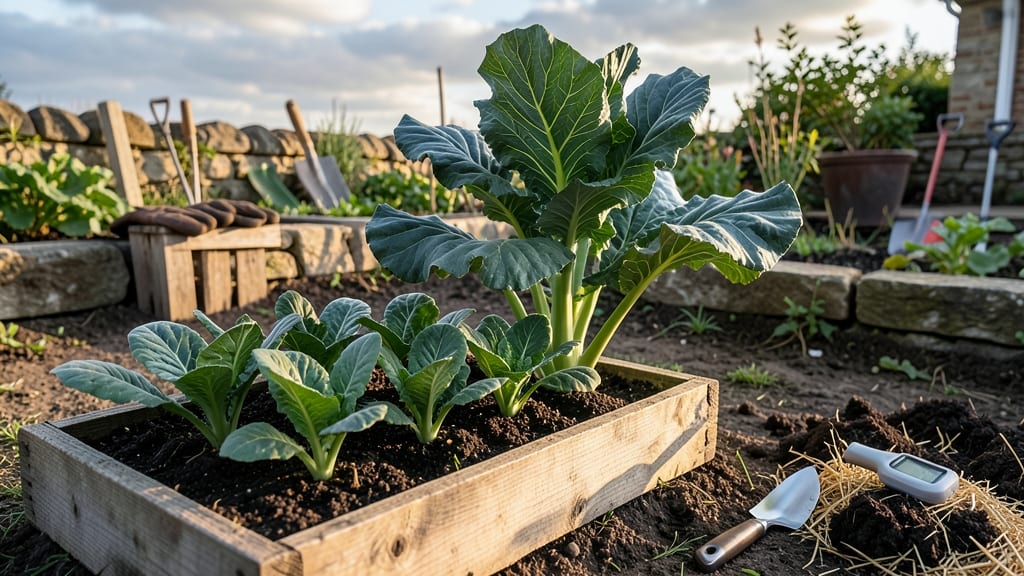
For spring plantings, wait until after your average last frost date (typically mid-March to early April across NC's zones 7a-8b). This ensures soil temperatures stay above 45°F, which is critical for germination. I use a soil thermometer to confirm—50°F+ is ideal for direct sowing.
The key to fall harvests is planting 4-6 weeks before your first frost (usually August 1-September 15). This gives plants time to establish roots before winter sets in. In zone 7a, I plant by September 1st to ensure mature leaves before hard frosts hit in November.
🌱 Pro Tip: Use row covers or cold frames to protect young seedlings during light frosts (28-32°F). I've extended my harvest by 2-3 weeks using floating row covers—just remove them during the day for airflow.