
Plants
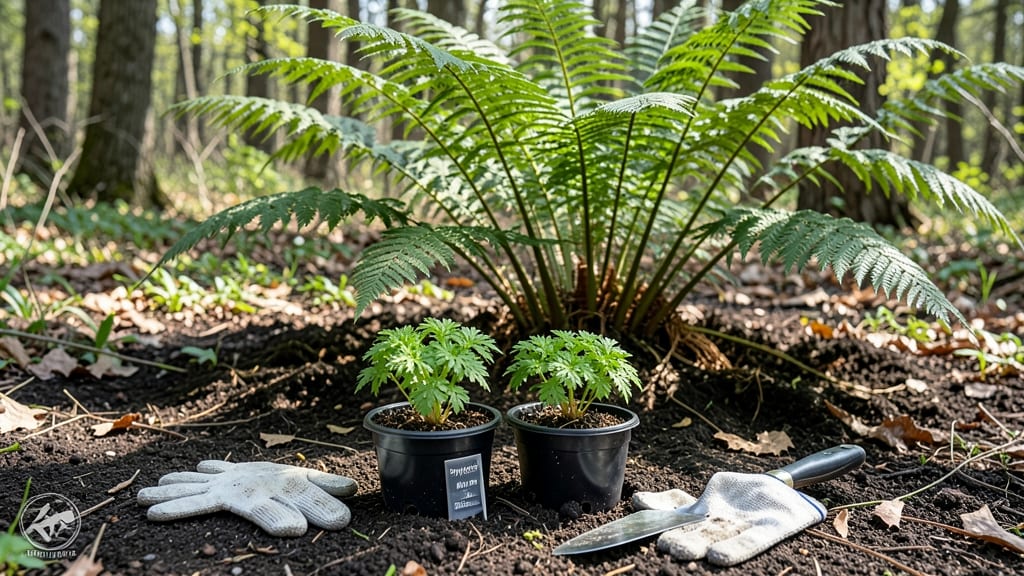
Timing your Fern planting in Michigan isn’t just about the calendar—it’s about catching that sweet spot between frost and flourishing growth in Zones 5b-6b. Plant too early, and a late frost could turn your delicate 🌿 into a sad, crispy memory.
Too late, and your ferns might play catch-up all season long.
Most gardeners in Michigan swear by spring planting after the last frost, usually around mid-May, but fall also offers a second chance—just get those roots down before the first frost in October.
The key is understanding your region’s microclimate, whether you’re in the Upper Peninsula’s cooler climate or the Lower Peninsula’s slightly milder zones.
I’ve learned the hard way that ferns thrive when planted in consistently moist, shaded soil, so preparation matters just as much as timing.
Whether you’re dividing mature plants, sowing spores, or grabbing nursery stock, these tips will help you avoid common pitfalls and set your ferns up for lush, year-round greenery.
Ready to transform your shady spots into a thriving fern haven? Let’s dive into the best months, soil secrets, and variety choices that’ll make your Michigan garden the envy of the neighborhood.
Ideal planting months for ferns in Michigan’s Zone 5-6 climate
Timing your fern planting in Michigan’s Zone 5-6 depends on whether you’re planting from nursery stock, divisions, or spores. Most gardeners opt for spring planting after the last frost or early fall before the first frost arrives.
The key is avoiding late spring frosts, which can damage tender new growth, while ensuring roots have time to establish before winter.
In Michigan, the last frost date typically falls between mid-April and early May, while the first frost arrives mid-October to early November. This leaves a 150-day frost-free window, giving you two prime planting windows: late April to early June and mid-August to early October.
The Upper Peninsula (Zone 4) may need adjustments, with a slightly shorter window.
For spring planting, aim for late April to early May once soil temperatures reach 50°F (10°C). This ensures roots can establish before summer heat arrives. If you’re planting spores, wait until late spring or early summer when humidity is higher and soil stays consistently moist.
| Planting Window | Best Time | Soil Temp | Notes |
|---|---|---|---|
| Spring | Late April–Early June | 50°F (10°C) | After last frost; ideal for nursery stock |
| Early Fall | Mid-August–Early October | 60°F (15°C) | Before first frost; roots establish before winter |
| Late Spring (Spore) | June–July | 65°F (18°C) | High humidity required; keep soil moist |
If you’re in the Lower Peninsula, where summers are warmer, late spring planting (May–June) works well for hardy varieties like Ostrich Fern (Matteuccia struthiopteris).
Meanwhile, the Upper Peninsula’s cooler climate favors early fall planting (August–September) to avoid short summers. Always check your local USDA Plant Hardiness Zone Map for precise adjustments.
For container gardening, you can plant ferns anytime during the growing season (April–October) since pots offer more control over soil temperature. However, outdoor ground planting requires careful timing to match Michigan’s unpredictable weather patterns.
Use a frost clock or local gardening apps to track frost dates in your specific area.
Pro tip: If you miss the ideal window, plant in early fall (late August–September) for a second chance. Ferns planted in fall establish roots before winter and often produce vibrant fronds the following spring. Just ensure the soil isn’t frozen when planting.
Watch for soil temperature cues—ferns thrive when soil is at least 50°F (10°C). Use a soil thermometer to confirm readiness, especially in cooler microclimates like northern Michigan. If temperatures dip below 40°F (4°C), delay planting until conditions improve.
Remember, Michigan’s microclimates vary. Urban areas like Detroit may warm up faster than rural Traverse City, so adjust your timing accordingly. Shade-loving ferns like Maidenhair Fern (Adiantum) can tolerate slightly later planting, while sun-tolerant varieties need earlier starts to avoid heat stress.
Once you’ve chosen your window, focus on soil prep and moisture control to give your ferns the best start. Mulching with organic matter helps retain moisture and regulate soil temperature—critical for Michigan’s variable springs. 🌿
How to prepare your Michigan garden for fern planting success
Preparing your garden for ferns in Michigan isn’t just about digging a hole—it’s about creating the perfect moist, acidic, and shaded environment these delicate plants crave.
Michigan’s Zone 5-6 climate means your soil might need extra attention, especially if you’re dealing with heavy clay or alkaline conditions common in many areas.
Start by testing your soil’s pH level—ferns thrive in acidic soil (pH 5.0-6.5). If your soil is too alkaline, amend it with peat moss or sulfur before planting.
I’ve found that adding a 2-inch layer of compost or leaf mold improves drainage while retaining moisture, which is critical for fern roots.
Ferns despise dry soil and direct sun, so choose a spot with partial to full shade. In Michigan, this often means planting near east- or north-facing walls or under the canopy of trees like oaks or maples.
If your yard lacks natural shade, consider container gardening with large pots placed in sheltered areas.