
Trees
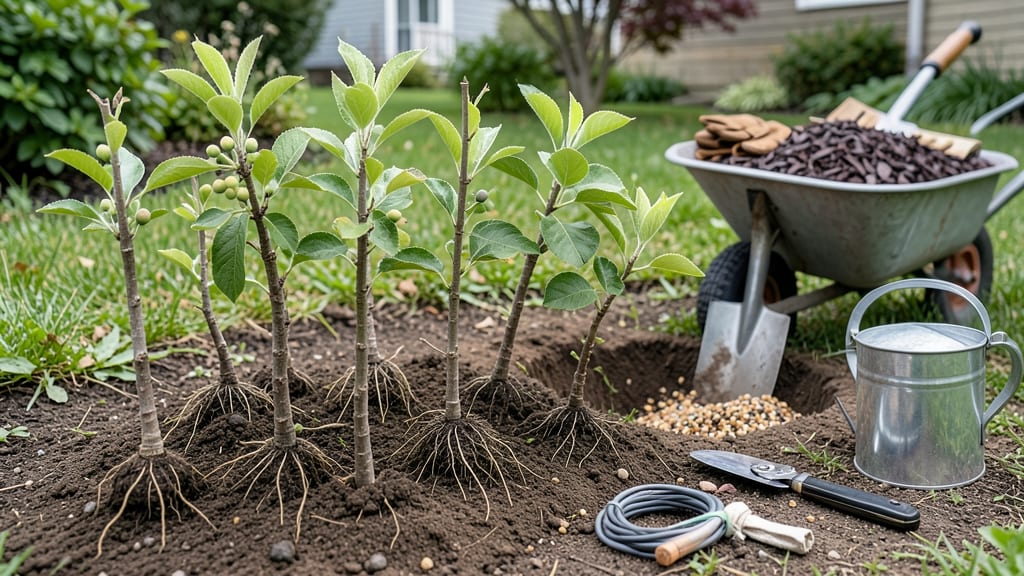
Timing your fruit tree planting in Washington State isn’t just about seasons—it’s about matching varieties to the state’s unique chill-hour zones and avoiding frost traps that can ruin years of effort. 🍎 Whether you’re in the milder Puget Sound region or the colder Eastern WA highlands, getting it wrong could mean waiting 3-5 years for a harvest—or worse, losing your tree entirely.
I’ve planted fruit trees across Washington’s diverse climates, and the best results always come down to one key factor: aligning planting windows with each variety’s chill-hour needs. Apples in Zone 6b need 500-800 hours below 45°F, while peaches in Zone 8a thrive with just 300-500 hours.
Plant too early, and frost zaps young roots; too late, and your tree struggles to establish before winter.
Here’s what you’ll discover: the optimal planting months for bare-root vs. container-grown trees, how to adjust for microclimates like the Columbia Basin’s heat spikes or the Puget Sound’s marine layer, and which varieties perform best in your specific zone.
Spoiler: Fall planting (September-October) often wins for Eastern WA, while Western WA gardeners can stretch into early spring.
Ready to avoid costly mistakes? Let’s break down the exact steps to plant your fruit trees for a bountiful harvest—no guesswork, just proven timing tailored to Washington’s climate quirks.
Washington State planting zones: chill-hour requirements by fruit tree variety
Washington State spans USDA zones 5b to 9a, creating a complex puzzle for fruit tree growers. Unlike most states, Washington’s chill-hour requirements—the number of hours below 45°F a tree needs to produce fruit—vary dramatically between regions.
For example, Eastern Washington (Zones 5b-7a) needs 800-1,200 chill hours for apples, while Western Washington (Zones 8a-9a) thrives with varieties needing just 300-500 chill hours. Choosing the wrong variety can leave you with no fruit despite proper care.
Understanding these requirements is critical because late-spring frosts and summer heat spikes further complicate timing. For instance, cherries in the Puget Sound region (Zone 8a) must be planted with varieties like Stella® or Lapins®, which tolerate 300-400 chill hours.
Meanwhile, apples in Spokane (Zone 6b) need 900-1,200 chill hours, making Honeycrisp or Fuji ideal choices.
Chill hours aren’t just about cold—they’re about consistent dormancy. Trees in Zone 5b (Northern WA) experience 1,500+ chill hours, while Zone 9a (Southern WA) sees fewer than 500 chill hours. This means peaches and nectarines, which need 500-800 chill hours, are risky in Western WA unless you choose low-chill varieties like Redhaven or Sanguine.
Here’s the key rule: Always match your tree variety to your zone’s chill hours. Planting a high-chill apple in Zone 8a won’t bear fruit, no matter how well you care for it. Conversely, planting a low-chill peach in Zone 6b risks poor fruit set due to insufficient dormancy.
🌱
| Fruit Type | Best Varieties for WA | Chill-Hour Range | Ideal USDA Zones | Planting Notes |
|---|---|---|---|---|
| Apples | Honeycrisp, Fuji, Gala, Granny Smith | 800-1,200 | 5b-7a (Eastern WA) | Needs cross-pollination |
| Cherries | Stella®, Lapins®, Bing | 300-500 | 7b-9a (Western WA) | Prone to frost damage |
| Peaches/Nectarines | Redhaven, Sanguine, Fantasia | 500-800 | 6b-8a (Transition zones) | Susceptible to brown rot |
| Pears | Bartlett, Anjou, Seckel | 400-700 | 6a-8b (Most of WA) | Self-pollinating options available |
| Plums | Santa Rosa, Methley, Stanley | 300-600 | 7a-9a (Western WA) | Dwarf varieties ideal for containers |
For Eastern Washington, where winters are harsh, prioritize cold-hardy varieties like Zestar! apples (1,000+ chill hours) or Montmorency tart cherries (800+ chill hours). In Western Washington, focus on low-chill varieties such as <
Best planting months for Washington fruit trees: dormant season timing explained
Washington’s diverse microclimates mean your planting window depends on whether you’re in the Puget Sound’s milder Zone 7-8 or the Eastern WA highlands’ colder Zone 5-6. For bare-root trees, late fall (October-November) is ideal in Eastern WA, while Western WA gardeners can stretch into early spring (February-March).
The key is planting when soil temps are above 40°F but before buds swell—typically 6-8 weeks before last frost.
Container-grown trees offer more flexibility—plant them anytime during dormancy, but avoid extreme heat or frost. In Zone 6b (like Spokane), aim for September-October to let roots establish before winter. Meanwhile, Zone 8a (like Yakima) can handle February-March plantings with minimal frost risk.
Always check your local last frost date—Eastern WA’s can hit as early as November 15, while Western WA’s linger until March 15.
Here’s my step-by-step dormant-season guide for Washington fruit trees, tailored to your region’s frost patterns and soil conditions:
Use a soil thermometer—plant when temps stay above 40°F for 5+ days. Eastern WA: September-October; Western WA: February-March.
Bare-root: Plant in dormant season (no leaves). Container-grown: Plant anytime dormant, but avoid frost/heat.
Twice as wide as root ball; amend soil with compost. Avoid planting deeper than 2-3 inches below graft union for container trees.
15-30 gallons of water post-planting. Mulch with 3-4 inches of wood chips to retain moisture and suppress weeds.
Urban areas (e.g., Seattle): Plant container trees near south-facing walls. Rural lowlands (e.g., Yakima Valley): Avoid frost pockets by planting on slopes or mounds.
Urban gardeners in Seattle or Bellingham face unique challenges like marine layer fog, which can delay bud break. Opt for early-blooming varieties like ‘Honeycrisp’ apples (300-500 chill hours) and plant in February-March to avoid spring frosts.
Meanwhile, Eastern WA’s Columbia Basin experiences heat spikes in summer, so prioritize late-season varieties like ‘Zestar!’ apples (800+ chill hours) and plant in September-October.
Pro tip: Use a frost calendar from your local WSU Extension office—they track 30-year frost averages by neighborhood. For example, Pullman (Zone 6b) has a last frost date of March 15, while Vancouver (Zone 8a) rarely sees frost after February 15.
Planting 4-6 weeks before these dates gives roots time to establish before winter stress hits.
Remember, container-grown trees are your best bet for urban areas with limited space or poor soil. They adapt better to microclimates and can be moved if needed.
Just ensure the container is at least 18 inches deep and has drainage holes—root rot is a silent killer in Washington’s wet winters. 🌱