
Plants
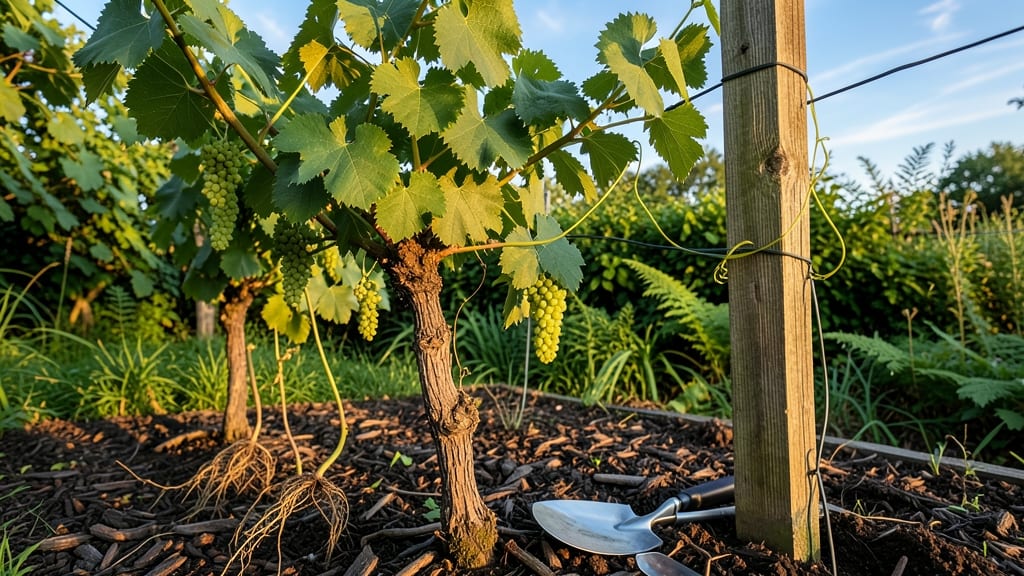
Timing your grape vine planting in California wrong can mean weak roots, poor fruit, or even vine death—but getting it right unlocks stronger growth and bountiful harvests.
With 9a-11 zones across the state, coastal areas like Zone 10a offer year-round mild weather, while inland valleys face frost risks that change planting windows entirely.
Most gardeners plant 🍇 grape vines in winter when they’re dormant, but the exact timing depends on your region. Coastal growers can plant from November through April, while inland gardeners should aim for February or March to avoid late frosts.
The key is matching your variety’s chill-hour needs to your local climate.
Whether you’re planting bare-root vines in the ground or containers, understanding your microclimate makes all the difference. I’ll walk you through the best months for each California region, soil prep tips, and how to protect young vines from unexpected frost—so you can set your grape vines up for success.
Ready to grow healthier vines with fewer struggles? Let’s dive into the perfect planting schedule for your California garden.
California grape vine planting timing by chill-hour requirements
California’s diverse microclimates make chill-hour requirements the most critical factor when choosing grape varieties and planting times. Chill hours (accumulated temps between 32°F and 45°F) trigger dormancy and spring growth. Northern California (e.g., Napa) averages 500-1,000 chill hours, while Southern California (e.g., Temecula) often sees 200-400 chill hours.
Planting the wrong variety in the wrong zone can stunt growth or prevent fruiting entirely.
For example, Cabernet Sauvignon and Zinfandel need 500+ chill hours, thriving in Northern California’s cooler zones, while Thompson Seedless and Flame Seedless (200-400 chill hours) excel in Southern California’s warmer inland valleys.
Matching your variety to your region’s chill hours ensures strong root development and reliable fruit set.
Use the USDA Chill-Hour Calculator (available via UC Davis Extension) to pinpoint your local chill accumulation. Most California regions accumulate chill hours between November and March, making this the ideal window for planting bare-root vines.
However, coastal areas (e.g., Santa Barbara) may extend planting into April due to milder winters.
Here’s how to align your planting with chill-hour needs and regional timing:
If you’re in a low-chill zone (e.g., Riverside or Palm Springs), opt for heat-tolerant varieties like Muscat or Black Monukka, which thrive with 200–300 chill hours. For high-chill zones (e.g., Mendocino or Lake County), Pinot Noir or Chardonnay (600–900 chill hours) will flourish.
Pro tip: Container-grown vines in Southern California can be planted anytime soil temps stay above 60°F, but bare-root vines planted in dormant season (November–March) establish roots faster. Always check local frost dates—planting too early in inland valleys risks frost damage to tender new shoots.
For coastal gardeners, extend your planting window into April since frost is rare. However, inland gardeners should finish planting by March 15 to avoid late-winter frosts. Use mulch (straw or wood chips) to insulate roots and maintain consistent soil moisture during establishment.
Remember: Soil temperature matters just as much as air temperature. Grape roots need
Best months to plant grape vines in California by region
California’s diverse microclimates mean your grape vine planting window depends entirely on where you live.
Coastal regions like San Diego or Santa Barbara (Zone 10a+) enjoy mild winters with no frost risk, while inland valleys such as Fresno or Madera (Zone 9a) face late frosts that can damage young vines if planted too early.
For coastal gardeners, the safest window runs from November through April, allowing time for root establishment before summer heat. Inland growers should target February or March to avoid late frosts, which can occur as late as mid-December in colder valleys.
Southern California’s desert regions (e.g., Riverside, Temecula) have their own rhythm—planting in late winter (February-March) ensures vines establish before scorching summer temps. Meanwhile, Northern California’s North Coast (Napa, Sonoma) benefits from a wider window (November-April), thanks to milder coastal influences.
| Region | Best Planting Months | Soil Temp Threshold | Frost Risk |
|---|---|---|---|
| Northern Coast (Napa, Sonoma) | Nov–Apr | 50–60°F | Low (Zone 10a) |
| Central Valley (Fresno, Madera) | Feb–Mar | 55–65°F | High (Zone 9a) |
| Southern CA (Temecula, Riverside) | Feb–Mar | 60–70°F | Low (Zone 9b–11) |
| Coastal CA (Santa Barbara, San Diego) | Nov–Apr | 50–60°F | None (Zone 10a+) |
If you’re unsure about your local frost dates, check the USDA Plant Hardiness Zone Map and your county’s agricultural extension service for precise timelines. For example, Sacramento’s last frost averages January 15, while Los Angeles rarely sees frost, making early planting safer there.
Pro tip: Use row covers or frost cloth if planting in late winter to protect young vines from unexpected cold snaps. In Zone 9a valleys, delay planting until soil temps consistently stay above 55°F to avoid root rot.
Container growers have more flexibility—they can plant earlier in coastal areas (October-November) or later in inland zones (March-April) since pots warm up faster. Just ensure your container has drainage holes to prevent waterlogging in California’s dry climate.