
Plants
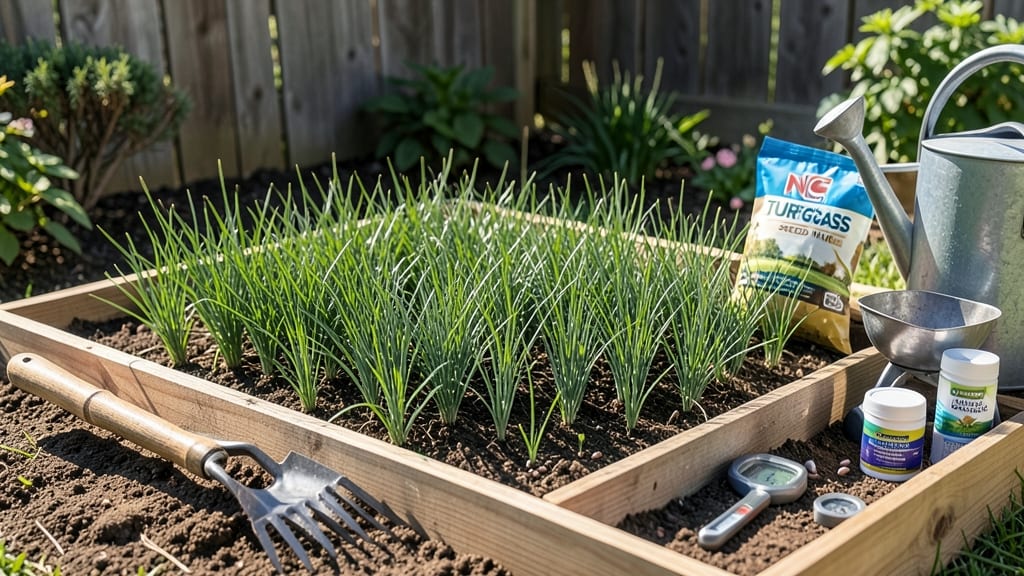
Timing your grass seed planting in North Carolina isn’t just about the season—it’s about the exact weeks that give your 🌱 the best shot at deep roots and thick growth before summer heat or winter frost sets in.
Get it wrong, and you’ll end up with patchy lawns, wasted seed, or even worse—money down the drain. But nail it? You’ll have a resilient yard that outlasts droughts, thrives in humidity, and handles North Carolina’s shifting microclimates like a pro.
I’ve dug into the science (and a few failed experiments) to break down the zone-specific windows that make all the difference—whether you’re in the Piedmont’s rolling hills, the Coastal Plain’s damp air, or the Mountains’ cooler stretches.
Ready to skip the guesswork? Let’s walk through the ideal planting months, soil prep secrets, and grass types that perform best in each NC corner—so you can finally stop second-guessing and start growing.
North Carolina grass planting calendar by zone: ideal weeks for cool-season vs warm-season grasses
North Carolina spans USDA zones 6a through 8b, creating distinct planting windows for cool-season (like tall fescue) and warm-season grasses (like Bermuda). Timing is everything—plant too early or late, and you risk weak germination or seedling stress.
Let’s break down the optimal 4-6 week windows by zone, including soil temperature thresholds and rainfall patterns that make or break success.
For cool-season grasses (tall fescue, ryegrass), the sweet spot is early spring or early fall. Spring planting should start 4-6 weeks before your last frost date, while fall planting should happen 6-8 weeks before the first frost.
In zone 6a (mountains), this means late March to early April for spring and mid-August to early September for fall. In zone 8b (coastal), shift those windows 2-3 weeks earlier to avoid summer heat stress.
Warm-season grasses (Bermuda, zoysia, centipede) thrive when soil temperatures hit 65°F+. In zone 7a (Piedmont), this typically means mid-April to early May, while zone 8a (coastal) can start as early as March 15. Planting too early risks seed rot from cool, wet soils, while waiting too long means summer drought stress before roots establish.
Here’s a zone-specific comparison of planting windows, soil temps, and rainfall considerations to maximize your lawn’s potential:
| Zone | Cool-Season Window | Warm-Season Window | Soil Temp Threshold | Rainfall Needs |
|---|---|---|---|---|
| 6a (Mountains) | Late March–Early April Mid-August–Early Sept |
Mid-April–Early May | 50–55°F (spring) 60–65°F (fall) |
1–1.5" weekly (avoid drought) |
| 7a (Piedmont) | Early March–Mid-April Late Aug–Mid-Sept |
Early April–Late May | 55–60°F (spring) 65–70°F (fall) |
1–1.25" weekly (humidity helps) |
| 8a (Coastal) | Mid-Feb–Early March Late July–Early Aug |
March 15–April 15 | 60–65°F (spring) 70–75°F (fall) |
1.5–2" weekly (high humidity) |
| 8b (Coastal) | Late Jan–Mid-Feb Late July–Early Aug |
March 1–April 10 | 65–70°F (spring) 75–80°F (fall) |
2" weekly (tropical conditions) |
Notice how coastal zones (8a/8b) have earlier windows for both cool- and warm-season grasses? That’s because milder winters and longer growing seasons allow for more flexibility. In contrast, mountain zones (6a) must rush to beat late spring frosts or early fall freezes.
Pro tip: Use a soil thermometer to confirm temps—cool-season seeds won’t germinate below 50°F, while warm-season seeds stall under 65°F.
Rainfall also shifts by region. Piedmont areas (zone 7a) often need supplemental watering during spring planting due to drier soils, while coastal zones (8a/8b) may experience excessive humidity, increasing fungal disease risks.
Always check your local NOAA climate forecasts for 7-day rainfall predictions before planting to avoid waterlogged soil.
One common mistake I see is planting warm-season grass in spring too early, only to have seeds rot in cool, wet soils. Conversely, cool-season grass planted in late summer often struggles with heat stress before roots establish
Critical factors that determine success: soil temperature, moisture, and seed selection for NC climates
North Carolina’s diverse climate zones mean soil conditions vary dramatically from the Coastal Plain to the Mountains. The difference between a thriving lawn and patchy failure often comes down to three key factors: soil temperature, moisture levels, and grass type selection.
Let’s break down what each region needs to succeed.
For cool-season grasses like tall fescue (common in Piedmont and Mountains), ideal soil temps hover between 60-75°F. In contrast, warm-season grasses like Bermuda or Zoysia (Coastal Plain favorites) thrive when soil reaches 70-85°F. Planting outside these ranges stresses seedlings, slowing germination or inviting disease.
Moisture is equally critical—NC’s humid summers can dry out soil faster than you think. The first 2 weeks post-planting require daily watering (1/4 inch per day), while established lawns need 1-1.5 inches weekly. Mulch helps retain moisture, but overwatering can suffocate roots or promote fungal growth.
🌱Pro Tip: Use a soil thermometer ($10 at garden centers) to check depth—plant when temps are stable at 60°F+ for cool-season grasses or 70°F+ for warm-season types.
⚠️ Red-Flag Mistakes to Avoid
- Planting in heatwaves: Seedlings burn out in 90°F+ soil (common in July).
- Skipping soil tests: NC soils often lack phosphorus or have high acidity—correct pH (6.0-7.0) first!
- Using wrong grass type: Bermuda in the Mountains? It’ll brown and die in winter.
🌧️ Fix: Amend soil with compost or lime 2 weeks before planting.
Regional seed selection matters too. Tall fescue dominates Piedmont (Zones 6b-7a) for its drought tolerance, while Centipede grass (Coastal Plain) thrives in acidic, sandy soils. Mountain areas favor fine fescue for its shade resilience. Always check seed bags for "NC-recommended" labels.
Finally, timing aligns with rainfall patterns. Plant in early fall (August-September) to leverage NC’s abundant autumn rains, or in late winter (February-March) when spring showers arrive. Avoid summer planting—unless you’re seeding Bermuda in June, when temps and humidity cooperate.
🌿 Remember: Soil temp > Air temp for germination. Test both! A shady spot might feel cool, but 6 inches deep could still be too hot for cool-season seed.