
Plants
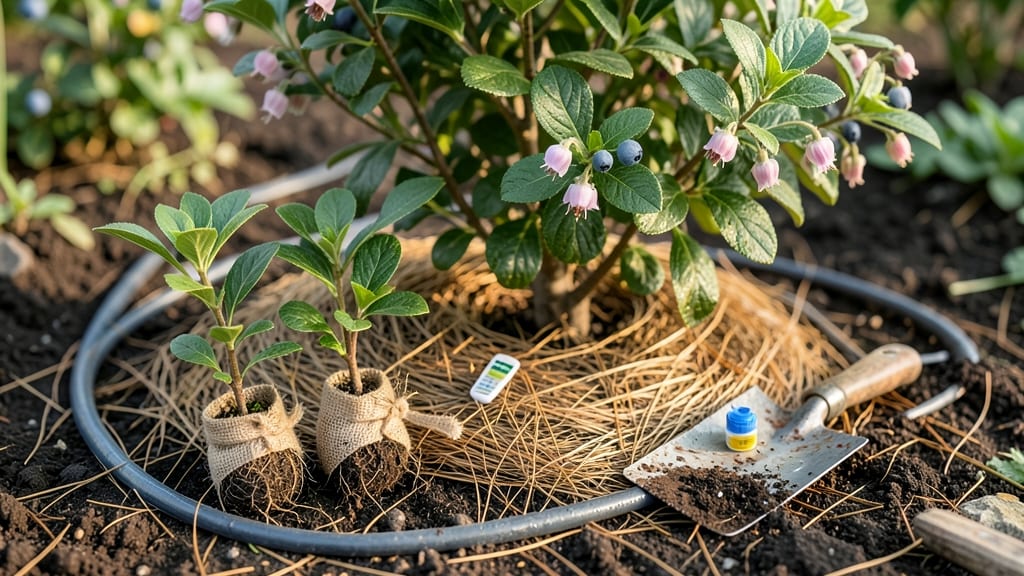
If you've ever tried growing blueberries 🫐 in Zone 9 only to watch your plants struggle or fail to produce fruit, you're not alone—the key isn't just about planting in the right season, but matching the perfect timing to your local chill hours.
Zone 9's warm climate (think Southern California, Arizona, or Nevada desert regions) presents unique challenges for blueberry cultivation, where traditional planting advice often falls short. The secret lies in understanding how chill-hour requirements—not just calendar dates—dictate when to plant for success, especially when frost isn't a factor year-round.
In this guide, I'll walk you through the ideal planting windows for Zone 9 (late fall to early spring) and how to choose varieties that thrive with 200–500 chill hours.
You'll also discover practical tips to protect your plants from heat stress and ensure a bountiful harvest come April–June.
Whether you're a first-time gardener or a seasoned grower, these insights will help you avoid common mistakes and set your blueberry bushes up for long-term success—no matter how hot your Zone 9 summers get.
Zone 9 chill-hour requirements for blueberry planting success
Growing blueberries in Zone 9 requires a different approach than cooler climates. Unlike traditional varieties, Zone 9 blueberries thrive with 200–500 chill hours—the number of hours below 45°F (7°C) your area experiences each winter.
Without enough chill hours, your bushes may produce fewer berries or none at all. Let’s break down how to match the right varieties to your microclimate for a bountiful harvest.
Most Northern Highbush varieties (like 'Bluecrop') need 800+ chill hours, making them unsuitable for Zone 9. Instead, focus on Southern Highbush or Rabbiteye cultivars, which are bred to handle warmer winters.
For example, 'Climax' (Southern Highbush) thrives with just 200–300 chill hours, while 'Powderblue' (Rabbiteye) needs 300–400 chill hours. Always check the USDA chill-hour map for your specific location.
To calculate your local chill hours, use a weather station or online tools like the USDA Plant Hardiness Zone Map. If you’re unsure, contact your local Cooperative Extension Service—they can provide precise data for your area.
For instance, Los Angeles averages 300–400 chill hours, while Phoenix may only hit 100–200 chill hours, requiring even more heat-tolerant varieties like 'Misty.'
Here’s a quick guide to chill-hour ranges and their impact on blueberry growth in Zone 9:
| Variety Type | Chill Hours Needed | Best for Zone 9 Areas | Notes |
|---|---|---|---|
| Southern Highbush | 200–400 | Los Angeles, San Diego | Compact, early fruiting |
| Rabbiteye | 300–500 | Phoenix, Tucson | Heat-tolerant, larger berries |
| Half-High | 300–400 | Riverside, Palm Springs | Mid-sized, versatile |
If your area falls below 200 chill hours, consider container gardening to move bushes to cooler spots during summer. For example, placing pots in a shaded patio or garage during peak heat can trick the plant into thinking it’s winter, encouraging flowering.
Always use well-draining soil with a pH of 4.5–5.5—blueberries are picky about acidity!
Another tip: Plant two varieties for cross-pollination. For instance, pair 'Climax' (Southern Highbush) with 'Powderblue' (Rabbiteye) to boost berry production. Just ensure they share similar chill-hour needs and maturity timelines. For example, 'Misty' and 'Peach Sorbet' both thrive in 200–400 chill hours and flower simultaneously.
Finally, avoid planting in late spring or summer—the heat stress will stunt root growth. Instead, aim for late fall or winter, when temperatures are cooler and soil moisture is higher.
This gives roots time to establish before the Zone 9 heatwave kicks in. With the right variety and timing, you’ll be harvesting juicy blueberries in as little as 2–3 years!
🌱
Best planting windows in Zone 9: fall vs. winter timing explained
In Zone 9, where frost is rare and summers are scorching, your blueberry planting window shifts dramatically compared to cooler climates.
The ideal months for planting are October through February, but the best choice depends on whether you prefer fall or winter timing—and each has distinct advantages for your Zone 9 garden.
Fall planting (October–November) gives roots time to establish before summer heat arrives, while winter planting (December–February) avoids the hottest months entirely. Both strategies work, but your local microclimate (e.g., coastal vs. desert) will dictate which timing suits your blueberry bushes best.
🌱 Did You Know? Zone 9’s mild winters mean you can plant blueberries year-round, but fall and winter are still optimal for root establishment and heat avoidance. Avoid planting in summer (June–August), when extreme heat can shock young roots.
Fall Planting (October–November)
- Roots establish before summer heat
- Soil stays warm enough for growth
- Less competition from weeds
- Risk of late-season heat stress in desert areas
- Requires extra mulch to retain moisture
Winter Planting (December–February)
- Avoids summer heat entirely
- Cooler soil reduces root shock
- Ideal for high-desert areas (e.g., Phoenix, Las Vegas)
- Slower initial growth due to cooler temps
- May need row covers for frost-prone microclimates
For Zone 9’s coastal regions (e.g., Southern California), fall planting often works best because the soil stays warm longer. In contrast, desert climates (e.g., Arizona, Nevada) benefit more from winter planting to escape the brutal summer sun.
Regardless of timing, always amend your soil with peat moss or sulfur to maintain a pH of 4.5–5.5, and water deeply after planting to encourage root growth. In container gardens, winter planting gives roots extra time to fill the pot before summer.
Pro tip: If you plant in late winter (February–March), choose dwarf varieties like ‘Top Hat’ or ‘Peach Sorbet’—they establish faster in Zone 9’s heat and produce fruit sooner. Mulch with wood chips to keep roots cool and moist during the critical first year.