
Trees
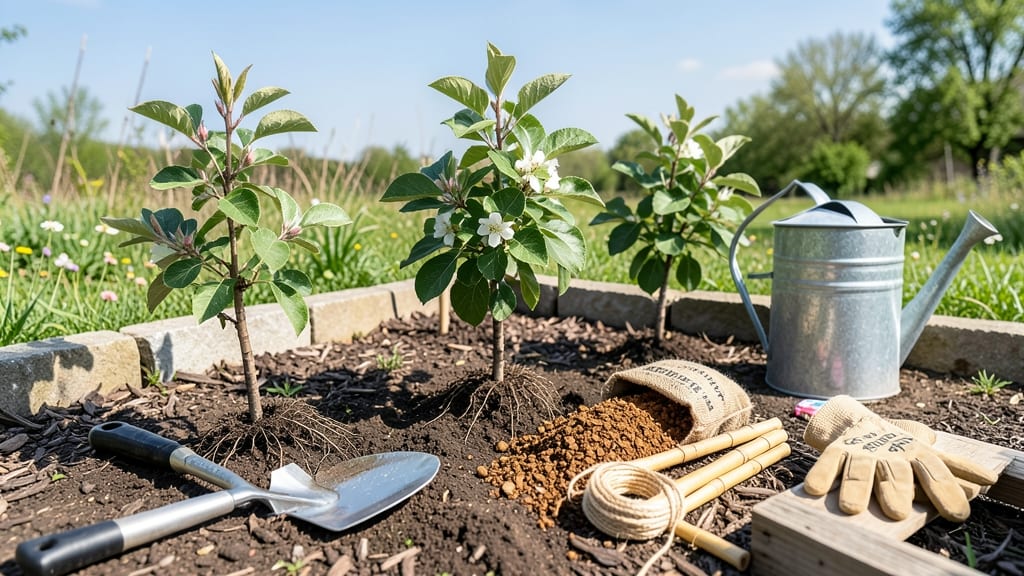
If you've ever wondered why some North Texas fruit trees thrive while others struggle, the answer lies in when to plant fruit trees in North Texas—and it's not as simple as just digging a hole in spring.
The chill-hour requirements of your 🍎 variety, combined with our unpredictable freeze dates, can make or break your harvest before it even begins.
Planting too early risks frost damage to delicate roots, while waiting too long means your tree won't establish before summer's scorching heat sets in. But here's the good news: with the right timing—typically late winter through early spring—you can give your fruit trees the perfect head start.
I'll walk you through the exact windows that work for North Texas' Zone 8a climate, plus how to match varieties to your microclimate.
Whether you're dreaming of juicy peaches or crisp apples, understanding these planting cues is the key to avoiding common mistakes that waste years of growth.
You'll learn which varieties adapt best to our heat, how to prep your soil for maximum root success, and even how to protect young trees from late frosts. Let's get your orchard off to the right start.
From bare-root planting in February to container-grown trees in March, I'll cover every detail so you can confidently choose the best time for your specific fruit tree. With 3 simple steps and expert-backed advice, you'll be well on your way to a bountiful harvest—no guesswork required.
North Texas fruit tree planting calendar: chill-hours by variety
North Texas’s Zone 8a climate creates unique challenges for fruit tree growers. The key to success lies in matching chill-hour requirements (the number of hours below 45°F needed to break dormancy) with our region’s microclimates.
Urban areas like Dallas often experience fewer chill hours than rural spots near Lubbock, so variety selection matters just as much as timing.
For most North Texas fruit trees, the ideal planting window is late February through early March. This timing allows roots to establish before the April heatwave and avoids late frost risks.
However, low-chill varieties (300–500 hours) can be planted as late as April, while high-chill varieties (700–900 hours) need to go in by February.
Here’s how to align your planting with chill-hour needs and North Texas frost dates to maximize success:
| Variety | Chill-Hours | Planting Window | Notes |
|---|---|---|---|
| Peach ('Redhaven') | 500–600 | Late Feb–March | Urban-friendly; blooms early |
| Plum ('Santa Rosa') | 300–400 | March–April | Low-chill; drought-tolerant |
| Apple ('Dorsett Golden') | 700–800 | Late Jan–Feb | Needs winter chill; rural areas |
| Fig ('Celeste') | 100–200 | March–May | Heat-loving; no chill needed |
| Persimmon ('Fuyu') | 200–300 | Feb–March | Cold-hardy; urban/rural adaptable |
When planting in North Texas’s urban heat islands (like Dallas or Fort Worth), opt for low-chill varieties like plums or figs, which thrive with 300–400 chill hours. In rural areas with cooler winters (e.g., near Amarillo), high-chill apples or pears (600–900 hours) will flourish.
Always check your local last frost date—Dallas typically sees its final frost around March 15, while Lubbock averages March 22.
For bare-root trees, plant immediately after purchase to prevent root drying. Amend your soil with compost and mycorrhizal fungi to boost root establishment. Water deeply after planting, then maintain 1–2 inches of mulch around the base to retain moisture and regulate soil temperature.
If you’re planting container-grown trees, do so anytime except during extreme heat (June–August) or cold snaps (December–January). These trees establish faster because their roots aren’t disturbed, making them ideal for late-season planting in April or May.
Remember, dormant planting (while the tree is still asleep) gives roots time to grow before spring growth begins. This is why February and March are the sweet spots for most North Texas fruit trees. Avoid planting in summer, as the heat stresses young trees and stunts root development.
Pro tip: Use a soil thermometer to monitor root-zone temperatures. Ideal planting conditions occur when soil temps are between 50–60°F. If temps rise above 75°F, delay planting until cooler weather returns in fall.
With the right chill-hour match and planting timing, your North Texas fruit trees will reward you with bountiful harvests for decades. Start with the varieties that fit your microclimate, and don’t rush—patience in planting pays off in fruit!
Critical mistakes to avoid when planting fruit trees in Zone 8
Planting fruit trees in North Texas requires precision—one wrong move, and your young saplings could struggle for years. The biggest mistake? Ignoring chill-hour requirements and planting during heatwaves.
When temperatures soar above 90°F before roots establish, transplant shock becomes fatal. I’ve seen bare-root trees wilt within days if planted in May.
Another critical error is skipping soil preparation. North Texas soil often lacks organic matter, and a pH below 6.0 locks out nutrients. Before planting, amend with composted manure or peat moss to hit that 6.0–7.0 sweet spot. Without this step, even drought-resistant varieties like peaches will stunt.
Dallas (Zone 8a) averages last frost dates around March 15, but rural areas like Lubbock (Zone 8b) can see late frosts until April 1. Planting peach trees in early March in Dallas is safe, but the same timing in Lubbock risks frost damage to blossoms.
🌡️ Pro Tip: Use local Almanac frost charts or weather station data to adjust your timeline by 1–2 weeks.
Many gardeners also overlook rootstock compatibility. A dwarfing rootstock like ‘Lovell’ thrives in North Texas’s heat, but pairing it with a high-chill apple variety (e.g., ‘Granny Smith’) leads to poor fruit set.
Always match rootstock to your chill-hour zone—for example, use ‘Flordaguard’ rootstock for citrus or ‘Okinawa’ rootstock for peaches.
Watering mistakes are another silent killer. Newly planted trees need deep, infrequent watering—not light sprinkles. I once saw a fig tree die because its owner watered it daily for 10 minutes instead of giving it a 20-minute deep soak once a week.
Aim for 1–1.5 inches of water per week, delivered at the base of the trunk, not the leaves.
Finally, pruning at the wrong time invites disease. Never prune in summer’s heat—wait until dormancy (late winter) to remove dead wood. Summer pruning opens wounds that bacterial blight or fire blight can exploit.
If you must prune in summer, do it on a cool, overcast day and sterilize your tools with rubbing alcohol.
By avoiding these pitfalls, your fruit trees will establish roots faster, resist pests, and bear fruit for decades. Start with soil tests, monitor microclimate frost dates, and water like a pro—your future harvest depends on it! 🌱